
In the current energy industry, success is achieved by those who effectively manage risks and invest with a forward looking approach. The company Teplárny Brno exemplifies this strategy by ensuring stable heating prices for 2026 and preparing strategic projects for Brno’s future. In an interview with CEO Petr Fajmon, we explore how their fuel and permit acquisition strategy operates, the key milestones that contributed to the company’s present standing, and the progress of the Dukovany hot water pipeline, referred to as the project of the century.
What specific actions have allowed you to ensure stable heating prices for 2026 despite inflation and increasing costs?
I am proud that we are among the few companies able to maintain heat prices for 2026 at the same level as this year, despite rising input costs. This reflects our firm commitment to the people of Brno to remain a reliable and fair long-term partner in the heat and energy sector. We are mitigating cost pressures through a mix of previously secured natural gas purchases, increased electricity sales revenue, and gradual decarbonisation – primarily by using biomass sources in Brno-North and expanding the use of heat from SAKO Brno. We split the required volume of natural gas into several tranches and purchase it over a longer period. Additionally, we use standard technical analysis models to time our purchases of natural gas and emission allowances – choosing when the market trend shifts from declining to rising. This minimises speculation and avoids random, ad hoc purchases.
This year, Teplárny Brno marked its 95th anniversary. Which historical milestones do you see as crucial to the company’s current standing?
The very start of Teplárny in 1930 was visionary – at that time, Brno was among the early adopters of combined heat and power generation. Known as the “Manchester of Moravia” for its textile factories and heavy industry, Brno needed a central heat supply system. This development gradually reduced the number of local boiler rooms and chimneys, greatly improving air quality in the city. Another significant technological milestone was the shift from coal to natural gas, which greatly reduced local emissions and modernised heating. Today, we are advancing this transformation with new phases – developing low-emission sources and projects to ensure stable heating for Brno in the coming decades.
The hot water pipeline from Dukovany has been called the project of the century. What stage is it currently in?
The project is now transitioning from a long-term vision to concrete actions. We have secured a contract for project documentation and the permitting process. Technical surveys are in progress, and the site is being prepared for the 42-kilometre route passing through fourteen municipalities. This will connect to an additional 53 kilometres of hot water routes within the Brno area. If all goes smoothly, construction will start in 2027, and the first heat from Dukovany should flow to Brno from 2023. It is important to highlight that this is not just a regional project. The hot water pipeline from Dukovany is considered a remarkable achievement both in the Czech Republic and internationally, due to its scale, technical complexity, and impact on energy security. It is often seen as an inspiration outside of Czechia. We have presented it at EXPO in Osaka, Japan, and in the European Parliament. I am pleased that it has drawn interest from experts not only across Europe but also from places like China and Australia.
What do you think is the biggest advantage of the hot water pipeline for Brno?
Certainly, energy security and major decarbonisation. Once the heat pipeline is commissioned, Brno’s reliance on natural gas will drop from about 80% to under 10%. The city will gain a strong domestic heat source, shielded from global market swings and geopolitical uncertainty, and cut emissions by roughly 135,000 tonnes of CO₂ per year.
Teplárny Brno is currently expanding into other energy sectors. Which areas will be prioritised in 2026?
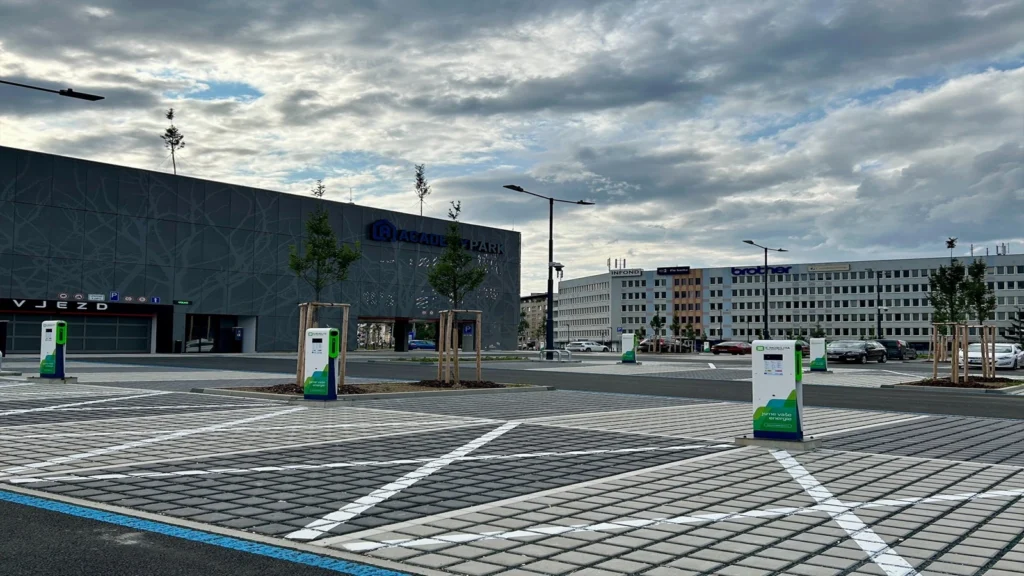
We aim to maintain stability for customers in 2026 while further enhancing Brno’s energy ecosystem. A key priority among the emerging areas is e-mobility. Besides expanding the charging infrastructure, we are also planning a new charging HUB unmatched in the Czech Republic. We are also continuing to decarbonise heat production, focusing on developing biomass boilers and increasing the use of low-emission sources in our energy mix. The broader context is also important: Teplárny Brno is no longer just about heat. We provide comprehensive energy solutions, including electricity, gas, cooling, and e-mobility. That is why our new slogan is: We are your energy.