
The patient-focused initiative by RBP health insurance company has significantly decreased wait times for MRI scans in the Czech Republic’s most industrialised region. We asked its director, Antonín Klimša, why the insurance company is broadening its diagnostic services to include follow-up specialist consultations.
What prompted you to join the Magnet213 project five years ago, and how has it affected the reduction of MRI scan waiting times for your policyholders?
As a regional health insurance company, we have certain advantages, such as flexibility, a focused group of policyholders, and efficient network management. This enables us, unlike other health insurers, to carry out innovative projects like Magnet213. The project was designed and implemented based on two main assumptions: an increased density of MRI facilities in our region, and a heightened demand in the industrial areas of Ostrava, Frýdek-Místek, Havířov, and Karviná. However, the initial motivation came from complaints by doctors and patients about long waiting times for MRI scans, often three or four months, with some cases reaching up to six months, delaying diagnosis and treatment. Therefore,
we partnered with the first four providers to establish a network of facilities in the heart of this industrial region, serving a catchment area of about half a million people (Ostrava, Havířov, Karviná, Frýdek-Místek), guaranteeing MRI scans for our insured clients within 14 days. This won’t disadvantage clients of other insurance companies, as it will utilise the existing equipment beyond a single-shift operation. This project demonstrates that insurance companies do not just compete in preventive funds or vaccination contributions. Currently, we have seven cooperating MRI facilities.
How is the demand evolving?
Since 2020, when we launched this project, we have assisted over 30,000 patients, and interest in Magnet213 continues to grow. Among our insured individuals, the largest age group is 30–54 years (45%), followed by 55–69 years (31%). Our clients have become very appreciative of this service, with some even willing to travel long distances for the diagnostic exam. This is happening even with the introduction of new devices in our region, which naturally enhances the availability of this screening method. That is why RBP has decided to elevate Magnet213 and start implementing pilot projects for follow-up care. We will not only provide timely MRI exams but also offer follow-up consultations with specialists, such as in neurology or orthopaedics.
What other plans do you have for improving healthcare accessibility or health programmes?
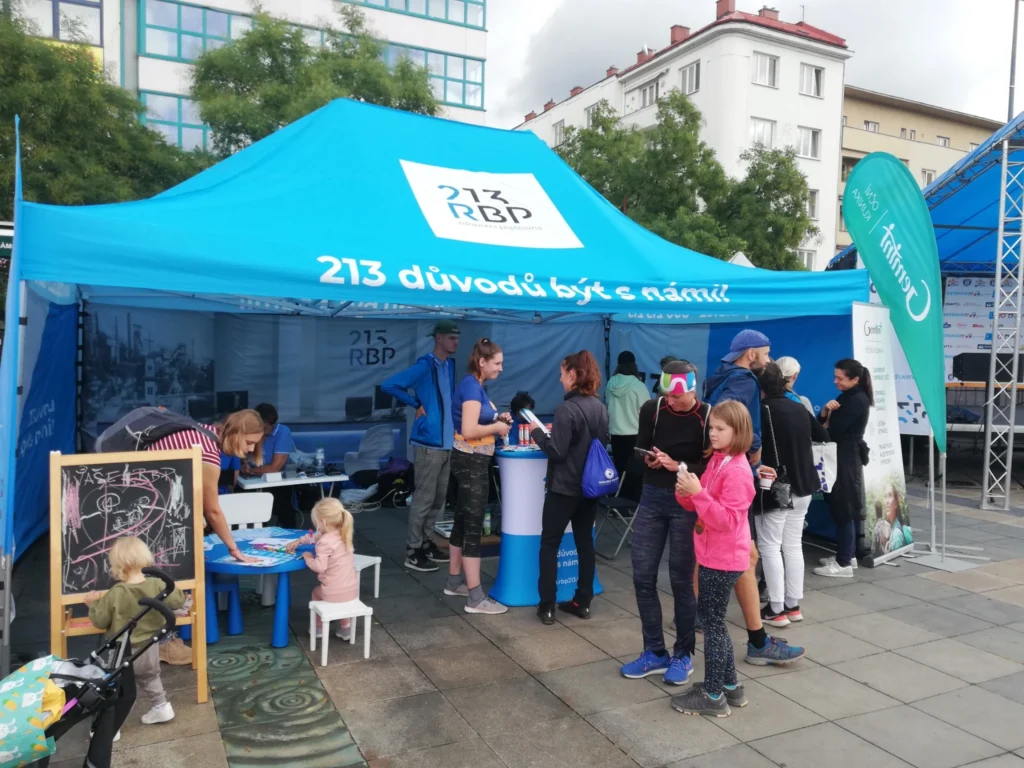
Our projects mainly target patients with chronic diseases, which makes sense given our region’s industrial impact on health. In “Chance for the Heart”, we focused on heart patients, followed by the “Geny213” (Genes213) project to detect hereditary diseases before planned pregnancies. We are now launching the “Healthy Lungs” project. Another major preventive and diagnostic initiative is “PreDIA”, centring on early diabetes prevention. Over a million Czechs have diabetes, and many are unaware their blood sugar is beyond normal levels. We are focused on prediabetes, where the body shows warning signs before diabetes develops. Thousands of our insured clients participate in these impactful projects. As an employee health insurance company, we also promote prevention in workplaces by offering health measurements via mobile health tents. There is considerable interest in this type of prevention, and I find that personally very satisfying.