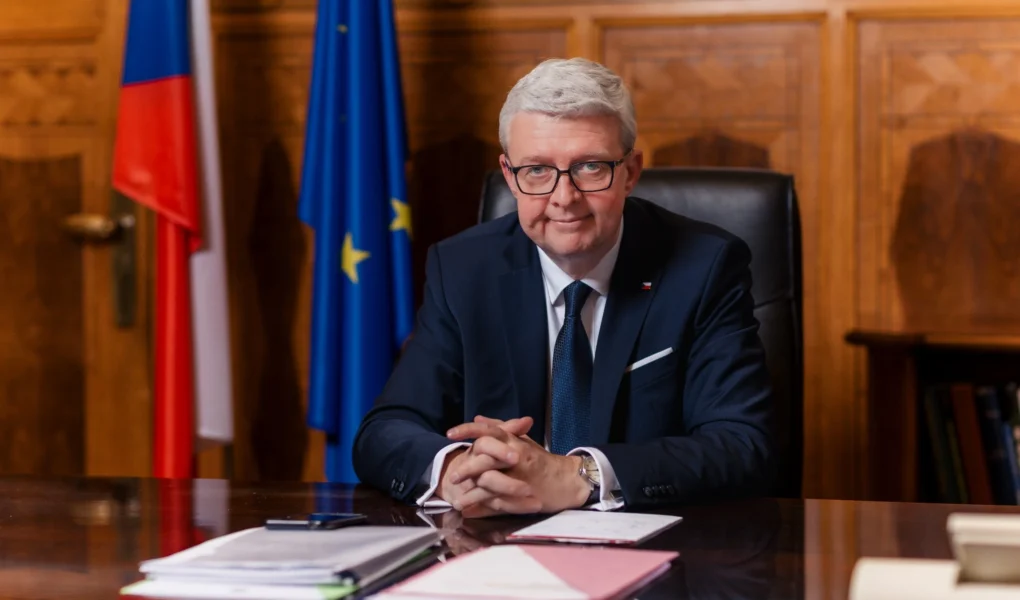
The Czech industrial sector is grappling with energy costs, electrical grid capacity, permitting process timelines, and the sustained stability of investment conditions. We explore these developmental prerequisites with Karel Havlíček, First Deputy Prime Minister and Minister of Industry and Trade. He addresses emission allowance reforms, the strategic importance of nuclear energy and natural gas, and the necessity for accelerated construction processes and enhanced critical infrastructure protection.
What actions are you planning for 2026 to ensure more stable, foreseeable energy and gas costs for the Czech industry in the long term? Which specific initiatives do you believe will be most effective at the state level, through regulation, and via European legislation?
Stable energy prices are essential for industrial competitiveness. That is why we are pushing Brussels to reform the EU Emissions Trading System. Volatile allowance prices cause electricity price instability; we need a system that is less prone to speculation and more reliable. We are also firm on technology-neutral climate policies: nuclear and renewables should work together, not against each other. Here at home, we want faster approvals and less paperwork. The cheapest power is what we can produce quickly without ureaucratic delays. We are also closely tracking developments in the Middle East, given their potential implications (note: this interview was conducted in early March 2026).
You are calling for significant investment in transmission and distribution, with European funding playing a role. How will you determine which projects come first, ensuring funds reach the areas and industries where grid limitations are the biggest barrier to growth? And what is your plan for monitoring how these investments affect the regulated portion of energy bills for companies and households?
A strong industrial base requires a strong infrastructure. This is an undeniable fact. We need to channel investments to areas where inadequate grid capacity is blocking new developments and industrial growth. Our focus is on regions with high production concentrations and potential for new sources. It is imperative that modernisation costs do not impose disproportionate burdens on businesses and households. That is why we are going to fight to secure maximum European funding after 2028. And pricing needs to be fair; it should reward efficiency, not just keep raising costs.
What do you think is a realistic timeline and financing plan for building new nuclear plants in Czechia? How would you split the risks between the state, investors, and consumers? And what potential do you see for smaller modular reactors in industrial regions?
You cannot have stable energy without nuclear power. For Dukovany, we are targeting a 2029 construction start with the first reactor running by 2036. The financial structure combines state lending with a Contract for Difference (CfD) mechanism, ensuring price predictability for both the project and end-users. The government bears systemic risk while establishing a stable regulatory environment. Construction execution remains the investor’s responsibility. This represents an equitable allocation of responsibilities. We view small modular reactors as complementary capacity, particularly for industrial zones and district heating applications. This is not experimental but integral to our long-term strategic planning.
How should gas plants and heating facilities fit into the Czech energy system as flexible backup? What is your plan to ensure we have enough fuel and capacity when winter demand spikes? And what parameters do you think make sense to support with public money?
Gas is a bridge, not a destination. But without a bridge, we cannot cross the river. During this transition phase, gas is critical to maintaining grid stability and handling demand spikes. The heating sector is already shifting away from coal. Most plants should be coal-free in just a few years. We are setting up capacity mechanisms that comply with EU guidelines to ensure we have sufficient power available. Public money should go where it matters most: boosting energy security and grid stability, especially for combined heat and power plants and flexible backup sources.
Critical infrastructure was on the agenda in Berlin, too. What particular security gaps at energy and industrial sites are you planning to close this year? And how will you tie together physical security, cyber protection, and supply chain resilience?
Energy is now the top security concern. Maintaining robust oversight of critical technologies and their supply chains is imperative. We place particular emphasis on the risks associated with companies from third countries. We will link physical protection, cybersecurity, and supply chain resilience into a single framework. The goal is an energy sector that is not only economically viable but also secure.
Which factors, regulatory or market-based, present the most significant impediments to capital deployment in energy and industrial infrastructure, and how will you set up cooperation with companies so that new capacities are created more quickly, but without legislative instability and without further increasing the administrative burden?
Today, investment is not hampered by a lack of capital, but rather by lengthy permitting processes. We intend to address this issue. Given that market mechanisms alone cannot finance all the resources required for stabilisation, we propose establishing targeted and foreseeable support instruments. Companies need to know that the rules will apply in the long term. Stability and speed represent eessential prerequisites for new capacity development.


