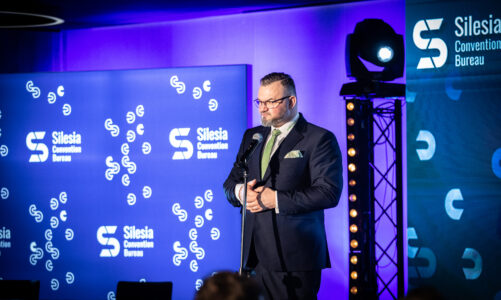

Tomáš Aberl, Brno City Councillor. Photo: Brno City Municipality.
The city is investing in large arenas, stadiums, and sports facilities for everyday use. City Councillor Tomáš Aberl explains how Brno sets its priorities, how it supports sports clubs, and why new projects must also be viable in terms of operations, energy efficiency, and economics.
Brno has significantly increased its commitment to the sports infrastructure in recent years. This year, the multifunctional T-Mobile ARENA is set to be completed, preparations are underway for a new football stadium behind Lužánky, and you are also planning a multipurpose hall for track cycling and track and field. What criteria guide the municipality in prioritising these massive developments, what are the most critical gaps remaining in the city’s sports infrastructure?
When deciding on major sports investments, we base our decisions on the long-term strategy for the development of sports in Brno and on the actual needs of athletes and residents. Two years ago, we adopted the new Brno City Sports Concept, which established clear priorities for further development. We assess a project’s contribution to sports, user base, potential to host major events, and significance to the city’s development. Despite being the Czech Republic’s second-largest city and a prominent sports hub, Brno has historically lacked facilities that match its size and aspirations. We are rectifying this by finalising the T-Mobile ARENA, partnering with a private investor for a new football stadium, and designing a multipurpose velodrome and athletics hall as part of the Brno National Sports Centre. These initiatives bridge long-overdue gaps and establish Brno as a premier destination among modern European sports cities.
Large arenas and stadiums attract attention, but the city’s day-to-day sports life relies primarily on smaller clubs, sports organisations, children, and accessible sports facilities in individual city districts. How does Brno plan to maintain a balance in the coming years between strategic construction projects and support for sports that ordinary residents can regularly participate in?
The city’s sports policy is not based solely on large-scale construction projects. While these are important for the city’s prestige and elite sports, the day-to-day work of clubs, coaches, and volunteers who introduce children to sports is just as essential.
In addition to strategic projects, we are therefore investing in school playgrounds and smaller sports facilities, and we strongly support sports clubs. This year alone, nearly 140 million Czech crowns were allocated to youth sports, more than 120 million Czech crowns to elite sports, and approximately 80 million Czech crowns to the operation of sports facilities. Thanks to these and many other grant programmes and individual subsidies, Brno ranks among the Czech cities that provide the most support for sports.
New sports facilities entail not only investment costs for the city but also long-term operational expenses, energy costs, and technology upgrades. How does Brno address economic and energy sustainability when planning new projects, and what criteria must modern urban sports facilities meet to remain viable in ten or twenty years?
Today, modern sports facilities cannot be evaluated solely based on their size or architecture. Their long-term operational sustainability is just as important. That is why, for every project, we monitor total life-cycle costs, energy efficiency, the use of modern technologies, and operational flexibility. To serve the public and sports clubs for many decades to come, new sports facilities must be green, smart, and multifunctional. We are committed to building infrastructure that is not just a showcase for Brno, but a sound investment for future generations and the city budget.