

Ivo Popardowski has been in the business of property and personal protection for over twenty years. He is the founder and CEO of ABAS IPS Management. He has built a Central European company from a local one that introduces modern technologies. In doing so, he never forgets his passion for fine art, the value of which he also perceives as a collector. He is the founder of a civic association for the support of public benefit activities.
Physical security includes the security of companies and people. How are modern technologies developing in this area?
Security today is a set of complex services, each with its own specific development. But if I were to name the key trends that cut across all its areas, then from the perspective of security technology itself, it is the shift from the use of artificial intelligence to socalled actionable intelligence. From the perspective of related legislation, it includes the proposals to introduce new standards and, last but not least, the view of he secure environment as a factor of the quality of life, the interconnection of pure security and communication technologies at all levels of everyday life (Internet of Things – IoT, SMART City).
What can we imagine when we talk about artificial intelligence in physical security?
The technological shift in physical security is most notable in video surveillance systems, so I will use examples from this sector. Since the late 1990s, the original analogue CCTV systems had used video detection to record suspicious activity, such as abandoned luggage. And although, from today’s perspective, it was a case of a crude recognition of changes in the brightness of the image, it was a breakthrough in the way remote surveillance was used in the physical security industry. Detection, however, was only a supplementary service, and its use from a business perspective was marginal.
Moreover, from the user’s point of view, it was more or less a passive approach, with delays in evaluating what was happening and, as a result, unreliable processes with many operational errors and false alarms. Today’s camera systems use both artificial intelligence and machine learning. The security market does not see analytics as a supplement but as a solid foundation.
This allows security service providers to focus on almost any analysis, which helps them to classify completely different objects with high accuracy and to assess the impact of their presence (or lack thereof) in an operational manner. All this with active use of data in an online environment and in different scenarios. We are no longer at the stage where intelligent functions alert us that something is
wrong but instead help us choose an appropriate response. It is said among experts that we have moved “from analytics to action,” and this is something that potential users are beginning to realise. The demand for the proactive use of cameras as remote sensors confirms this.
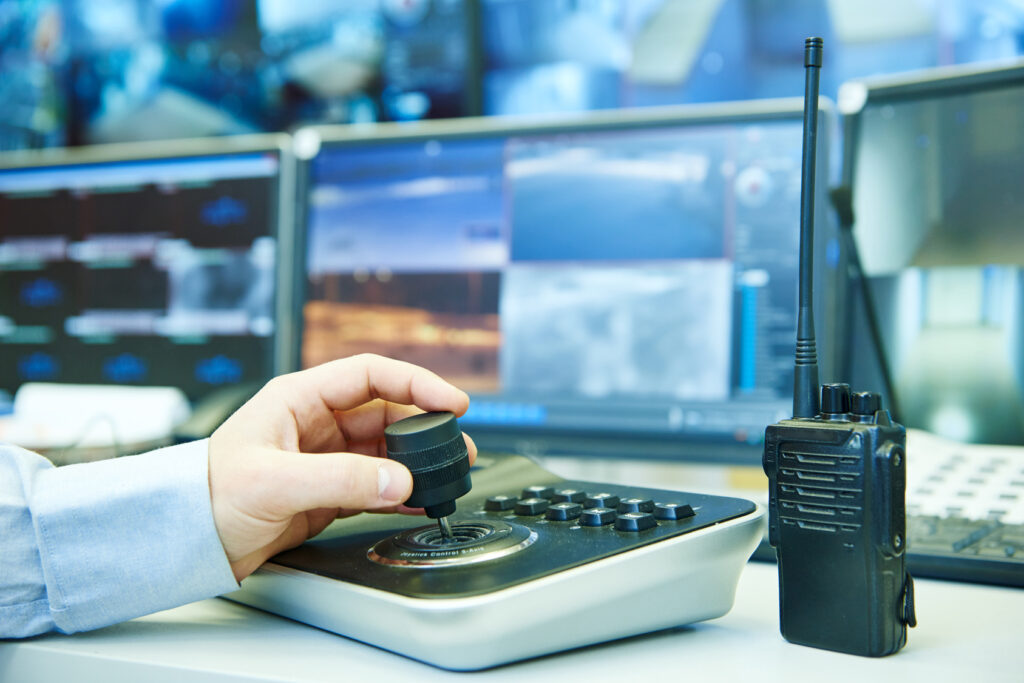
If I were to point out the most used of the many analytics in use, I would point to the almost limitless evaluation of human behaviour in the surveilled space and the reading of vehicle registration plates (ANPR), including accompanying information on speed, type and colour, identifying the targeted vehicle.
Using such data is no longer just the domain of security; specialists in marketing, retail, logistics and smart city builders will also find evaluation algorithms. From a more global perspective, the camera is just one sensor that is part of a whole called the Internet of Things. It is, therefore, evident that artificial intelligence is not only changing the security sector.
You mentioned smart cities. Smart solutions, i.e. the trend to find solutions that reduce costs not only for companies but also for municipalities, cities and regions, are closely related to them. What interesting things do you offer to local governments?
There is disproportionately more to use at the local government level. We are no longer talking about a partial solution but a comprehensive one. In terms of quality of life in the sense of smart, the most frequently discussed issues are the application in transport, the environment, the level of housing, the people who live here and the governance of the city.
Any city that has moved towards smart solutions can also be called a digital city. This is a concept where digital, information and communication technologies are used across the board to make more efficient use of infrastructure and reduce energy consumption. In addition to the traditional commercial subjects, there are also elements of the state’s critical infrastructure. Security thus plays an essential role here as well.
Leaving the cameras aside, the most important thing, in my opinion, is sufficient data capacity, followed by data security and qualified operators. The security sector has always been accustomed to a 24/7 operating mode, and smart city applications are also in operation 24/7, a fact that the local government has not been used to. It will, therefore, be interested in the services of commercial companies that operate practice-tested and independently certified surveillance and alarm receiving centres.
Just as remote alarm monitoring has been extended to include audio/video surveillance with two-way communication in the transition to IP technology, now artificial intelligence and the Internet of Things are involved. Data repositories are being created, and cloud-based solutions are being operated within professional surveillance centres. And we will soon be able to put an equation between the much-used terms security and smart.
Each of the topics outlined would certainly deserve a more detailed analysis, but if you had to conclude with one thought, what would it be?
Advanced sensors are already having a significant impact on making the environment we live in smarter, safer and more efficient. When I think about it, I will venture to say that with the presence of AI in security systems, combined with the Internet of Things and cloud operations, we are moving into the next phase of using technology not only for security but also for operational and business purposes.
Thank you for the interview.