
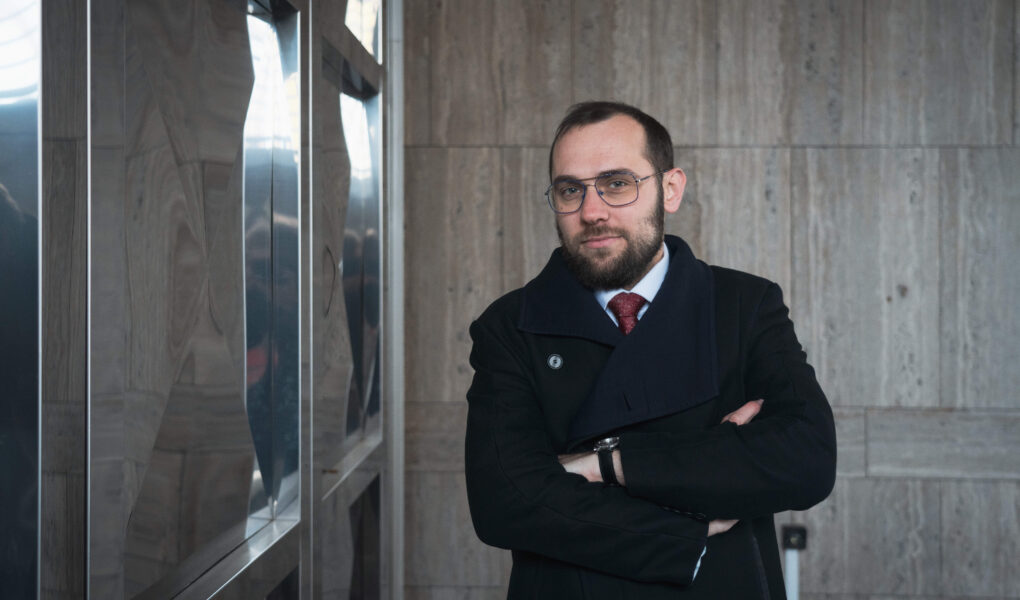
Tomáš Kopečný is the government’s commissioner for the reconstruction of Ukraine. His erudition is based on his experience in non-profit, economic, and defence diplomacy. The government has entrusted him with coordinating the assistance that state and non-state actors provide to Ukraine.
Assistance to Ukraine certainly does not only mean cooperation in the defence industry. In what other areas can Czech companies help today?
Czech companies can support Ukraine in other key areas. Our focus is on healthcare, energy, construction, and housing. And when we are talking about specific regions, the Dnipropetrovsk Region is significant for the Czech Republic.
The industrial structures of the Dnipropetrovsk Region and the Czech Republic complement each other, which creates a natural ground for cooperation. Several Czech companies are located in the Dnipropetrovsk Region and have been operating there for a long time, e.g. Škoda Transportation. Other Czech companies can also bring their knowledge and technological know-how there. There are many opportunities for cooperation.
The reconstruction of Ukraine may also mean an opportunity for Czech companies in terms of new contracts in the civil sector. What are the opportunities to get involved in Ukrainian investment programmes today?
It is essential to provide an objective and balanced picture of Ukraine in order to avoid distorted information. Even though Ukraine is facing financial challenges, it is not right to portray it merely as a country in turmoil and chaos. With regard to the financing of procurement, it is important to bear in mind that although the EU and the US have provided macroeconomic assistance to Ukraine, this is focused on basic social needs and current expenditures.
In discussions with our business entities and industry organisations, we have identified the unavailability of export insurance as a major problem. EGAP plays a key role in this respect. I have long called for the Government of the Czech Republic to approve the creation of a facility within EGAP that would allow commercial orders to Ukraine to be insured even in a state of war. Commercial banks can then respond and incorporate similar products into their portfolios.
It is important to have a realistic view of the situation. Ukraine is a competitive environment that requires hard work and proper risk assessment. We cannot expect this to be a simple subsidy Eldorado, as some might assume.
Are you planning to expand activities or business missions to Ukraine if the current security situation permits?
In July, we are planning a business and government mission with colleagues from other departments. We want to travel to cities like Lviv, Kiev, Dnipro, and other regional centres. These missions will also include business forums, allowing personal meetings between Czech and Ukrainian businesspeople. For those looking for information on financing contracts in Ukraine, there is also a general information signpost on the Business Club Ukraine website, which we have prepared together with colleagues from the Ministry of Industry and Trade. Here entrepreneurs can find links to the websites of institutions that will participate in the reconstruction of Ukraine, whether Czech, Ukrainian, or of foreign origin.
Thank you for the interview.


