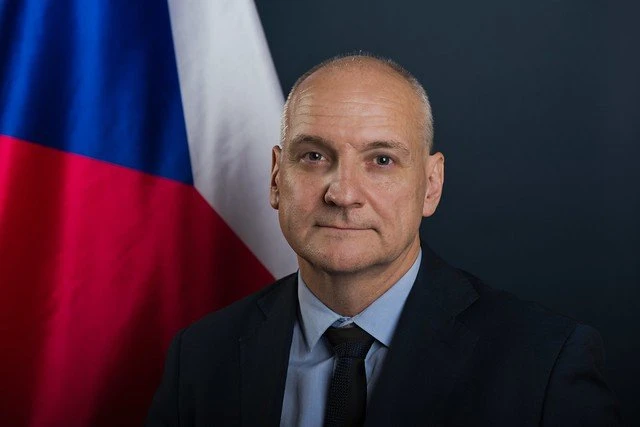
In this interview, Václav Bartuška, the Ambassador of the Czech Republic, discusses how Brexit has altered conditions for Czech companies in the UK and identifies the greatest current opportunities. He also highlights the increasing significance of the defence industry and the use of Czech culture as a strategic tool to bolster trade and investment.
How have conditions for Czech companies in the UK market changed after Brexit, and where are the biggest opportunities for them now?
After the UK left the European Union, conditions for Czech companies in the British market changed significantly. They have become more administratively challenging, especially regarding customs procedures, certification, and logistics, requiring more preparation. Nevertheless, the UK remains attractive due to its stable legal environment, high purchasing power, and strong focus on innovation. The most significant opportunities lie in high-value-added sectors such as electromobility, engineering, ICT, and medical technologies. With the UK’s emphasis on sustainability, decarbonisation, and the development of green technology, the energy sector offers opportunities, particularly in small modular reactors and renewable energy sources. Additionally, the UK government is heavily investing in digitalisation, data protection, and infrastructure modernisation, creating more prospects for Czech companies with innovative solutions and flexible supply chains. The defence industry also holds significant potential, as London seeks suppliers of new technologies, especially in cybersecurity, unmanned systems, and modern sensors. Czech companies offering technological excellence, competitive pricing, and swift adaptation to British standards have strong market potential.
The UK is significantly investing in its defence industry and armed forces modernisation. What opportunities does this create for Czech companies, and where can they provide added value?
The United Kingdom is a leader in defence technology and military modernisation. The Czech defence industry, known for its long tradition and advanced expertise, is very appealing to British partners, offering specialised components, electronics, optics, cybersecurity, unmanned technology, and modern simulation training systems. Czech companies add value through their flexibility, innovative approach, and ability to swiftly meet specific requirements, making them attractive partners in UK military modernisation projects. Culture often serves as a bridge between countries.
How does Czech culture contribute to raising awareness of the Czech Republic in Britain, and do you think it can also have an economic impact?
Yes, I agree that culture is one of the most effective bridges between nations. Czech culture in the United Kingdom – whether in literature, film, music, or design – greatly influences how our country is perceived. Czech music holds a particularly strong position in Britain. The recent performance of Janáček‘s opera at the Royal Opera House, conducted by Jakub Hrůša, was notably well-received. This event attracted not only a specialised audience but also the broader British public, highlighting the Czech contribution to world music. Likewise, Czech films regularly feature at British festivals, Czech literature is gaining new readers through quality translations, and Czech design and glassmaking maintain solid prestige in the UK. Culture indeed has an economic impact, opening doors for trade, tourism, and investment. It serves as a form of soft power, building long term trust and fostering interest in Czech products, technologies, and creative industries. Thus, culture is not merely a form of representation but a strategic investment that enhances the Czech Republic’s image in the UK as a creative, inspiring, and modern partner.


