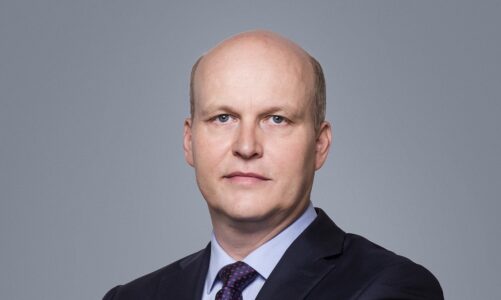

What is the social and economic value of investments in health? We ask Mehrdad Doustdar, Managing Director of the Prague office of the leading biopharmaceutical company MSD, which provides the Czech market with innovative medicines and vaccines for both human and animal use.
The vision of the new Ministry of Health encompasses stabilisation of healthcare financing and increased pressure on the efficiency and responsibility of health insurance companies. How is MSD responding to this pressure in the context of innovative medicines and vaccines?
Our response is simple and yet very pragmatic: we put the value of in novation in the context of overall sustainability. Innovative medicines and vaccines should deliver clear and measurable health as well as socioeconomic benefits. MSD therefore systematically works with its own and publicly available data, health economic and budget impact models, and, where necessary, also conducts socioeconomic analyses that capture, for example, the impact on productivity or social expenditure. This approach is fully in line with the ambition to give patients access to modern treatment while giving health insurance compainies confidence that they are paying for what works.

Increased emphasis is placed on education, disease prevention, including screening programs. How does MSD contribute to reducing the growing disease burden on the system and improving population health cutcomes?
Prevention has become an economic necessity rather than an optional extra. To support the cause, MSD has been bringing to Czechia for already more than two decades vaccines against human papillomavirus (HPV), pneumococcal infections, hepatitis, and other serious infectious diseases. Data show, for example, that current HPV vaccination coverage in girls saves the Czech healthcare system roughly three billion CZK every year, in addition to lives saved. Another example is the prevention of respiratory infections which significantly reduces productivity losses. As regards cancer, I could mention that we have been investigating and offering treatment options in the earlier stages of the disease.
You said that data plays a crucial role in healthcare. How can data and advanced technologies contribute to better decision making, healthcare optimization and increased cost transparency?
Data and modern technologies are the key to shifting Czech healthcare from “reacting to disease” to well-managed, predictive care. In Prague, MSD has one of its global technology centres, where we use artificial intelligence, machine learning and big data analytics to accelerate medicine development, improve clinical trial design and support real-world projects. We have been mapping cancer patient pathways within the Czech healthcare system or building predictive models for the earlier detection of certain diseases. The same principles can and should be used in routine care: a robust data infrastructure and sharing of anonymised data will help physicians make better-informed decisions, enable payers to identify efficiencies as well as waste in care, and increase transparency in general in terms of how we spend our resources.
What do you see as the greatest challenge for the Czech healthcare system in the next five years and how can it be faced? How should the Ministry of Health react?
I see the greatest challenge in reconciling the sharp increase in the number of chronically ill patients with demographic ageing and limited public budgets. Over the next decade, we expect a 10% increase in diabetes, almost 30% in cancer, and nearly 70% in heart failure patients. If nothing changes, we will have more patients, fewer economically active contributors, and a system that struggles to finance not only access to innovation but even its basic functions. The Ministry of Health should give priority to prevention and vaccination, speed up and simplify reimbursement processes for new medicines, revise current medicines prescription restrictions to improve access to quality treatment in regions, and fully exploit the potential of data, clinical trials and a broader Life Sciences strategy as a driver of both health and economic prosperity. An equally important point is to start looking at investments in health through the prism of total societal costs, not just the healthcare budget. We know, for instance, that 15 billion Czech crowns a year are spent on healthcare for patients with type 2 diabetes, but another 28 billion come from the social security system as disability pensions, care allowances or sickness benefits. Health investments can substantially reduce future social and economic costs.
You have just been elected Chairman of the newly elected Board of Directors of the Association of the Innovative Pharmaceutical Industry (AIFP). How can you, in your new role, support the vision and challenges we have just talked about?
I would like the AIFP to become a strong and reliable partner who helps turn the Minister of Health’s priorities into reality. We are committed to ensuring that patients have timely, equitable access to the most advanced medicines and vaccines. For that our ambition is a resilient healthcare system built on three essential pillars: innovation, access, and sustainability. Breakthrough therapies and vaccines can only fulfil their purpose when patients are able to benefit from them in a timely manner, regardless of where they live. Achieving this requires close collaboration among all stakeholders, with industry as well as public partners, working together toward a shared purpose. I firmly believe that collaboration is our strongest lever for progress.