
The company Lesy města Brna, a.s. (Brno City Forests), which is responsible for the largest municipal property in the Czech Republic, manages around 8,300 hectares of municipal forests, focusing on both production and public benefit activities. We spoke with Director Jiří Neshyba about how the company addresses climate risks, maintains strategic stability, expands its service portfolio, and balances economic objectives with the public functions of forests in the Czech Republic’s second-largest city.
How does your company incorporate climate risks into its long¨term strategy, and what plans do you have to ensure stability in production and cash flow?
Lesy města Brna, a.s. began addressing climate risks even before the bark beetle crisis emerged. Prior to 2018, it shifted to cultivating ecologically stable, diverse, and height-varied stands, which are crucial for withstanding extreme weather and pests. The company also relies on a diverse business portfolio, reducing dependence on timber sales. It has long developed related forest production, public services, and wood chip production for energy, supported by strategic marketing to maintain brand and sales stability. This approach creates a strong foundation capable of responding to market changes and unpredictable climate events.
You engage in forest education, training, and public events. Is this primarily a benefit for your brand or more of a public service?
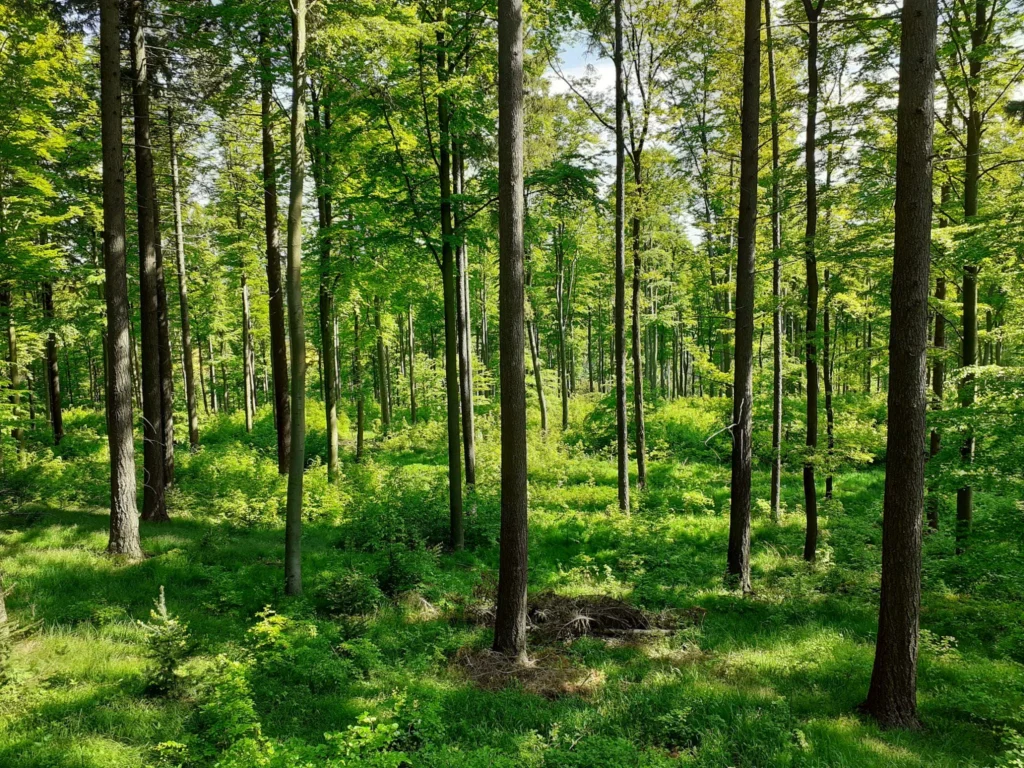
Both aspects are equally important. Lesy města Brna is a leader in forest education and public awareness in the Czech Republic, consistently developing activities that enhance its reputation while promoting for ests as a public asset. Programmes for children and adults raise awareness of the importance of nature, explain the principles of modern for est management, and foster a connection with urban forests. Although this is not an economically dominant area, its impact on the brand and public opinion is significant.
Are you planning to invest in increasing the production capacity of wood chips and biofuels?
Yes, this is a key part of the company’s development. Lesy města Brna is the main supplier of biomass for the Bystrc boiler room, supplying about 9,000 tonnes per season, and now also for the Brno-Sever boiler
room in Maloměřice, where consumption is 80,000 tonnes per season. To ensure these volumes, the company invested at the end of 2024 and beginning of 2025 in enhancing the handling area at the Dřevo and Rájec centres, purchasing a Liebherr L 566 XPower loader, repairing rail way tracks, installing a weighbridge, and expanding technical facilities. Future development includes buying a new woodchipper and modifying handling areas. These steps aim for a modern, high-quality, and economically sustainable operation.
How do you view the diversification of your portfolio, considering you manage recreational areas and accommodation facilities along with forests?
Diversification offers obvious advantages. Recreational areas and accommodation facilities attract many visitors to the forests and provide a steady additional income. They also enable us to highlight the company’s efforts where the public naturally encounters the forest. This approach demonstrates that an urban forestry company can operate sustainably, deliver economic benefits to the city, and fulfil important recreational and social roles.
Can you align the goals of the municipal company with Brno’s strategy in greenery, recreation, and sustainability, while still achieving economic self-sufficiency?
We have been successful in this for a long time. Lesy města Brna actively engages in city projects while ensuring stable management. This includes maintaining recreational areas, especially around the Brno Dam, building and managing lookout towers in the Holedná and Soběšice game reserves, creating nature trails and other recreational facilities, maintaining retention reservoirs, and repairing forest roads. The company also participates in projects under Brno’s participatory budget. These efforts strengthen the public’s connection to nature, promote the sustainable use of urban forests, and demonstrate that environmental responsibility, public service, and economic stability can coexist.