

AstraZeneca is a global, innovative biopharmaceutical company driven by science with the core mission of
delivering medicines that transform or improve patients’ lives and benefit society as a whole. Its therapeutic work focuses on finding solutions that can prevent, treat, or even cure some of the most significant contemporary diseases. AstraZeneca collaborates with academia, governments, professional societies, patient organisations, and other partners to access leading scientific insights, foster innovation, and accelerate the development and availability of new medicines for as many patients as possible.
Julio Ordaz is managing AstraZeneca in the Czech Republic, Slovakia, and Hungary since December 1, 2025. Julio has been working in the pharmaceutical industry for more than 17 years. Since 2021, he has led AstraZeneca Mexico and, until recently, served as president of AMIIF (Association of Innovative Pharmaceutical Industry) there. His priorities in the Central European region are improving access to innovative medicines, developing clinical research, and digitizing healthcare.
In the past, you have led teams in different regions that have successfully expanded access to innovative treatments and worked with regulators to accelerate the entry of new therapies to the market. Which principles from this experience do you plan to apply in Central Europe, where market and regulatory conditions are different? What three priorities will you set for AstraZeneca in the Czech Republic, Slovakia, and Hungary for your first year in office?
First and foremost, I want to emphasize that AstraZeneca sees a bright future in Central Europe. The team led by my predecessor, Kuuno Vaher, did an excellent job. Since 2021, when our three markets were merged into a single cluster, we have launched more than 100 new indications for patients across therapeutic areas, becoming a key, trusted partner in healthcare. I want to continue this legacy and bring my experience from other regions, where, during my tenure as President of AstraZeneca Mexico, the company became a market leader not only in terms of sales but also in terms of bringing new medicines to market. I realize that Europe is a different environment in terms of regulation and legislation, but I am convinced that there are certain similarities. I see them particularly in the joint efforts and cooperation of all stakeholders in healthcare to find new solutions for patients and continuously improve the level of healthcare in all countries. The approach to market innovation is based on systematic work with data, the evaluation of benefits, and transparent agreements. For me, it is crucial to continue to strengthen trust in our company through predictability, partnerships with healthcare institutions, and a clear link between commercial strategies and clinical value – this is a universal language that worked in Mexico and one that
I want to build on in Central Europe. I have set three key priorities for Central Europe. The first is to continue to improve the availability of innovative therapies in oncology, biopharmaceuticals (including
cardiovascular, renal & metabolism, and respiratory & immunology) and rare diseases for as many patients as possible at the right time. The second priority is to build partnerships that drive the digitization of healthcare and streamline the patient journey from early diagnosis to treatment. The third key area is strengthening clinical research. My goal is to enable more patients to participate in clinical trials and to make Central Europe a more attractive region for conducting them.
AstraZeneca is responding to the challenges associated with an aging population and the growing number of chronic diseases. What do you see as the company’s main competitive advantage in these areas?
We are responding to the fact that not only the Czech Republic but also the rest of Central Europe is facing a silent epidemic of cardiovascular and oncological diseases. These groups of diseases are the two most common causes of death here, and predictions say that in the next 10 years they may place an even greater burden on the health of the European population. This then turns a health issue into an economic, social, and demographic challenge. AstraZeneca is tackling chronic diseases by developing medicines that can reduce the impact of these diseases, advancing precision and digital health, strengthening healthcare system resilience, promoting health equity, and partnering to improve access and longterm outcomes. The times we live in are full of crises and uncertainties. However, I want to emphasize that AstraZeneca is not only able to face them, but also to prevail in them. We have played a key role in managing the covid-19 pandemic. Our main advantage is the combination of cutting-edge research and the ability to quickly put innovations into practice.. This enables us to provide comprehensive solutions that reduce the burden on the healthcare system and improve treatment outcomes.
The Czechia, Slovakia, and Hungary region has varying levels of digitization and healthcare system structures. How do you intend to set up a unified AstraZeneca strategy that takes local needs into account while fulfilling the company’s European vision?
All three countries have undergone significant development over the past 35 years. They have transformed into modern, developed countries that sometimes even surpass Western European markets in terms of access to innovation, have a robust healthcare infrastructure, and offer excellent access to quality healthcare. It is important to acknowledge that there are also differences, which is perfectly natural. The Czech Republic is leading in national cancer screenings and in its high level of centralization of care. Hungary, on the other hand, offers significant strengths around digitization. In Slovakia, the influence of a strong professional community and the voice of patients, which supports the rational use of innovation in real practice, is admirable. We are ready to support all three markets there and help take healthcare to the next level. Our philosophy and vision remain an innovative, socially responsible, and strongly science-based approach, which we are successfully implementing.
The Czech Republic and Slovakia are also facing a shortage of healthcare personnel and scientific capacity. How can AstraZeneca contribute to solving this problem?
AstraZeneca recognizes this problem and, as a socially responsible company, is prepared to contribute to its solution. We have been demonstrating this for a long time. It all starts with education, which must be attractive to future healthcare professionals. The standard of medical and healthcare faculties in Europe is generally very high, and we should appreciate that, for example, the Czech government has deliberately increased its capacity at medical and healthcare faculties in recent years. AstraZeneca has a long-standing
partnership with Czech universities, led by Charles University and faculty hospitals. Our goal is to make the scientific environment more attractive, support talent, and strive for maximum excellence in research. We recently signed a memorandum with the Czech Technical University and CEEOR, in which we commit to cooperation and sharing know-how, among other things, to strengthen the analytical capacities of the Czech healthcare system.
Science and research are an important part of AstraZeneca’s philosophy, as you confirm. What other research priorities are you bringing to the Czech market?
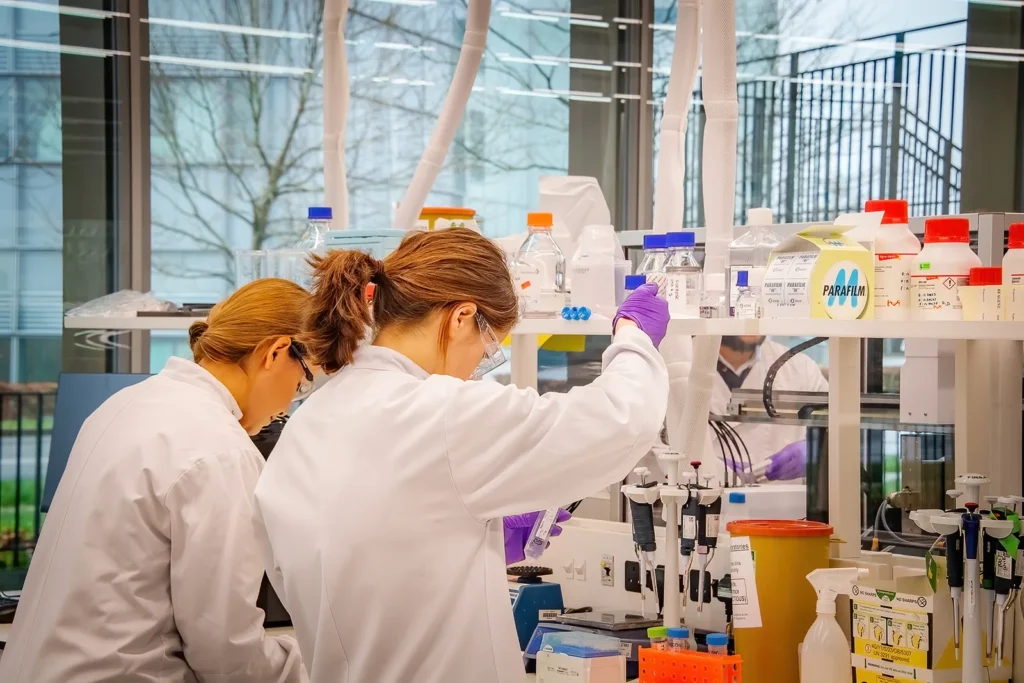
AstraZeneca is one of the leaders in clinical research in Central Europe. We are the market leader in Hungary, and I would like to see the Czech Republic and Slovakia become more attractive in this regard as well. In the Czech Republic, we invest hundreds of millions of crowns in clinical research. Clinical research is crucial for healthcare because it drives it forward. For many patients, participation in a clinical trial offers hope for an improvement in their health when standard treatment options have been depleted. In oncology or rare diseases, clinical research is proving to be the most effective path to treatment. In addition, it supports the development of science, improves the quality of care, and brings
significant economic benefits. We will therefore support joint efforts with all healthcare stakeholders to simplify administration and offer to share our know-how in the field of digitizing clinical research processes, as also mentioned in the upcoming National Strategy for Clinical Trials of Medicinal Products. I personally very much welcome the fact that the government coalition’s policy statement also mentions improving conditions for clinical research. There will be much to build on in this area.
You mention rare diseases. These have long been one of AstraZeneca’s key therapeutic areas. Do you believe that access to medicines for rare diseases and innovative pharmacothera py in general is sufficient and sustainable in the region?
It must be said that, looking at the overall data, the Czech Republic has made great progress in this area and is now at the forefront of care for patients with rare diseases. Overall access to innovative pharmacotherapy has improved significantly here, especially in recent years. However, if we were to assess the systemic availability of these drugs to patients, there is always room for improvement. Real
access to treatment remains a challenge. There are barriers due to the capacity of specialized centers, regional differences, and legislation. On the other hand, everything is evolving. The Czech Republic took
a significant step forward in 2021 when adopting a key amendment to the Act No. 48 on public health insurance, that tremendously improved the conditions for access to innovative therapies, including
orphan drugs. We must value this system, continue to cultivate it, and always seek the best possible solutions for patients.
What is AstraZeneca’s vision for sustainable development in the Czech Republic, Slovakia, and Hungary, and how does it link health and social goals with its business model?
Our goal is to accelerate access to innovative treatments while reducing our environmental footprint. Globally, we are aiming for a 50% reduction in emissions in the value chain by 2030 and carbon
neutrality by 2045 at the latest. I am pleased that we already have concrete results – in the Czech Republic, we reduced emissions by 83 % between 2023 and 2024 and introduced 100% electromobility
across the entire cluster. We connect healthcare and social goals with business through data and investments. Last year, we invested nearly CZK 200 million in domestic research and clinical trials in the
Czech Republic. Dozens of studies are underway in the region, and we collaborate with universities, faculty hospitals, and professional societies. Last year, we provided treatment to a quarter of a million
Czech patients. We intend to continue our commitment to bringing them new, modern therapies with a lower impact on the climate in the years to come.


