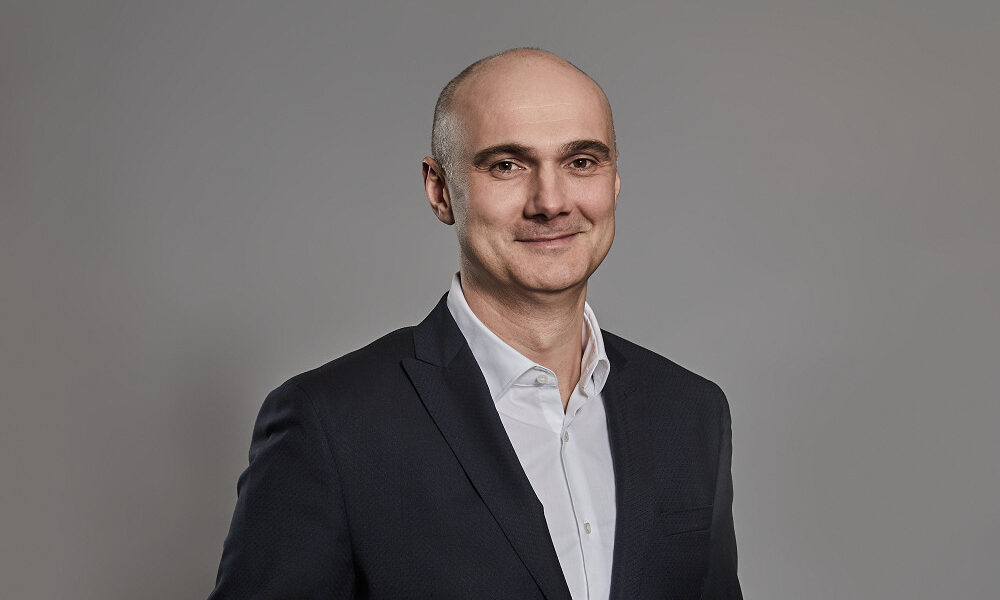
“Our companies are strategic for the defence and security of the Czech Republic. In peacetime, we rely on exports, but now the needs of the Czech army and firefighters take priority,” says David Chour, the Vice-Chairman of the Board of Directors and Chief Financial Officer of the Czechoslovak Group (CSG), It includes, for example, the Tatra automotive company, the manufacturers of ground armoured vehicles TATRA DEFENCE VEHICLE and EXCALIBUR ARMY, the radar manufacturer ELDIS, and the traditional Slovak ammunition manufacturer MSM Nováky.
The most important brand in your group is Tatra, the third oldest car manufacturer in the world. How is it currently
doing?
Tatra, which we own together with the PROMET GROUP, is on an upward trajectory. The company is increasing production and sales and hiring new employees — it even wants to hire 500 this year. This is partly a result of the security situation: the Tatra trucks are used not only in the civilian sector but also by soldiers and firefighters. We are fulfilling orders for the whole world, but the needs of the Czech army and firefighters come first, and we reserve capacity for them. That is why we were able to start production immediately after signing the latest contracts with the Czech Ministry of Defence for about 280 vehicles in August. The Tatra vehicles also showed their capabilities during the fire fighting in Hřensko as they are unsurpassed in the field.
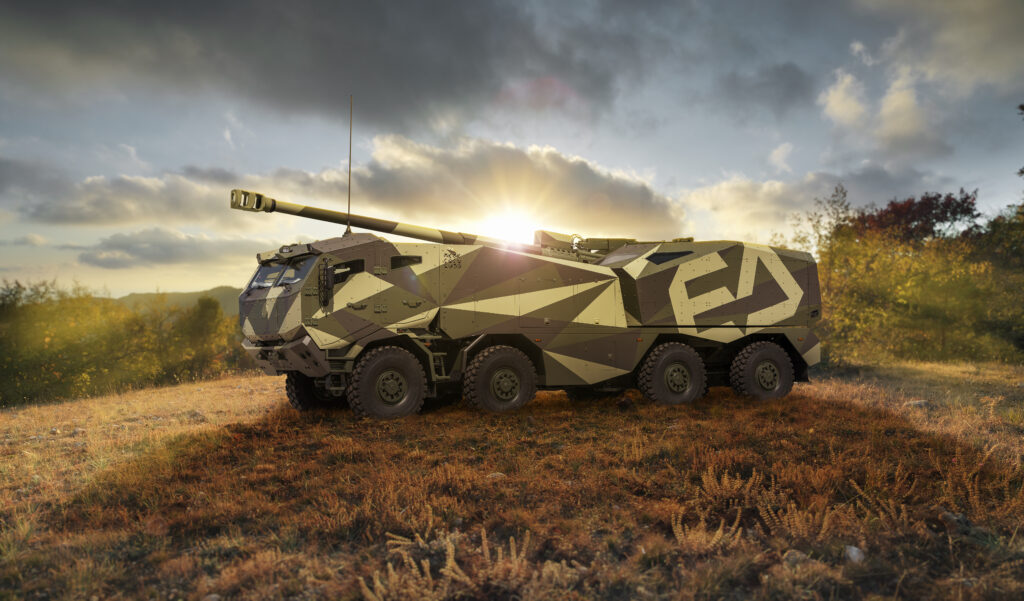
Less well-known — but no less important — CSG companies are the manufacturers of military ground equipment, EXCALIBUR ARMY and TATRA DEFENCE VEHICLE. I assume their business has been greatly affected by the Russian aggression against Ukraine.
You are right. We have been supplying ground equipment to Ukraine since 2016. After this year’s outbreak of Russian aggression, our assistance has multiplied. We are helping Ukraine by providing military equipment and ammunition and servicing Ukrainian army vehicles in the Czech Republic. We work in close cooperation with the Czech state and its licensing administration. Its staff are extremely busy and, although their work is not visible, they deserve great credit. I believe that thanks to Czech assistance to Ukraine, the war will one day end, and Czech industry will contribute to the peaceful reconstruction of the country.
How do you contribute to the modernisation of the Czech army? Are you currently fulfilling any orders?
In addition to the aforementioned deliveries of Tatra logistics trucks, we are fulfilling a contract to deliver 62 six-wheel TITUS armoured personnel carriers. The project is on schedule, these vehicles have been in military trials since September, and most of them will be produced in 2023. But let me mention another important thing: not all the needs of our army can be met by the Czech defence industry. Suppose the Ministry of Defence has to use a foreign supplier. In that case, it is important that the project is partly localised in the Czech industry. This way, some of the money will stay in the Czech economy, and the know-how will be created here on how to take care of, repair or modernise foreign equipment. For example, our radar company Retia is cooperating with the Israeli company Rafael to supply the Spyder air defence system for the Czech army.
The Czech Republic has a problem with a soaring state budget deficit. Household living standards are suffering from inflation, especially in energy prices. Do you think the Czech Republic can afford a significant increase in defence and security spending?
Politicians should explain to the people that this is an investment in the security of us citizens. It is a significant priority in the context of the war that is taking place a few hundred kilometres away. And the second condition must be met as well; namely, that the domestic defence industry’s share in the army’s modernisation projects is as large as possible. Because then we are talking about an investment incentive, job creation and revenue for the state budget. According to a study by the EY company, every Czech crown in a defence contract fulfilled by our companies is multiplied three times in the supply chain, and the same is true for jobs.
We are still talking about defence and security, but your group is much more diverse. You make radars, rail brakes and even watches. Is the security industry or the civilian industry more important to you?
In terms of financial results, it is usually half-and-half. Still, the war in Ukraine will temporarily tip the scales towards the defence and security side. But the CSG’s companies focused on civilian manufacturing are very important. For example, DAKO-CZ is a globally significant supplier of braking systems for trains, trams and subways. ELDIS, on the other hand, supplies radars that cover the entire airspace in India and control air traffic. And the production of watches by the Czech brand PRIM is an excellent addition to our core business.
The EU has a Green Deal policy and encourages banks to cooperate only with environmentally and socially responsible companies. Is it possible for CSG companies to do business in line with these requirements?
Our companies can certainly manage criteria such as increasing energy savings, reducing the carbon footprint, protecting water resources and biodiversity or recycling waste. Rather, we see some banks limiting their cooperation with the defence and security industry through their internal rules. In my opinion, this is an absurd attitude because they are damaging a sector that is crucial to Europe’s internal and external security and the protection of its values. And they are acting in direct contradiction to the policy of the European Union, which supports the development of the European defence and security industry.
Thank you for the interview.