

The electrochemical company Bochemie has recently launched a series of cutting-edge battery storage systems that it plans to implement in its own operations. According to Bochemie board member David Vodička, these systems will also lower the company’s energy costs by nearly two-thirds.
Manufacturing companies, large public buildings, and other facilities with high energy consumption deal with the uncertainty of the energy market. What was the initial situation for Bochemie?
We manufacture a wide variety of chemical products for both household and professional use, along with industrial battery components for our German subsidiary, GAZ. This production process consumes a lot of energy, so in the reference year 2020, our Bohumín plant needed a total of 21.4 GWh of electricity and gas. Therefore, it is essential for us to reduce this cost item significantly by higher tens of percents.
Simply replacing windows and installing solar panels on the roof is not sufficient. It is necessary to adopt a comprehensive set of measures focused on both conserving energy and producing your own. This demands a thorough understanding of where and how energy is used. Additionally, possessing extensive expertise in applicable technologies and their seamless integration is crucial.
Where should we begin?
You need a partner who will be dedicated to your operation over the long run. For us, that partner has been Amper Savings for the past nine years. Their experts began by conducting a thorough audit of our operation’s status and requirements, then recommended a series of straightforward changes that could be implemented without significant financial expenses. This initial phase took about five years and led to a reduction in energy costs amounting to CZK 2.4 million at the prices at that time.
Additional measures were funded through Energy Performance Contracting (EPC) or by repayment from guaranteed savings. Among these initiatives, we acquired a more efficient steam source and a cogeneration unit capable of generating both heat and electricity simultaneously. We also upgraded our heat and steam distribution systems and expanded our energy management operations.
How much did these measures cost and to what extent did they pay off?
The investment of CZK 56.4 million was expected to be recouped within ten years. However, as a result of the war in Ukraine, high inflation and other circumstances, energy costs and input material prices started to rise. The financial benefits of the measures described increased to nearly 2.5 times more than originally expected. Last year alone, we saved CZK 12.7 million, which is close to a quarter of the investment costs.
That sounds very good, but your plans are much more ambitious.
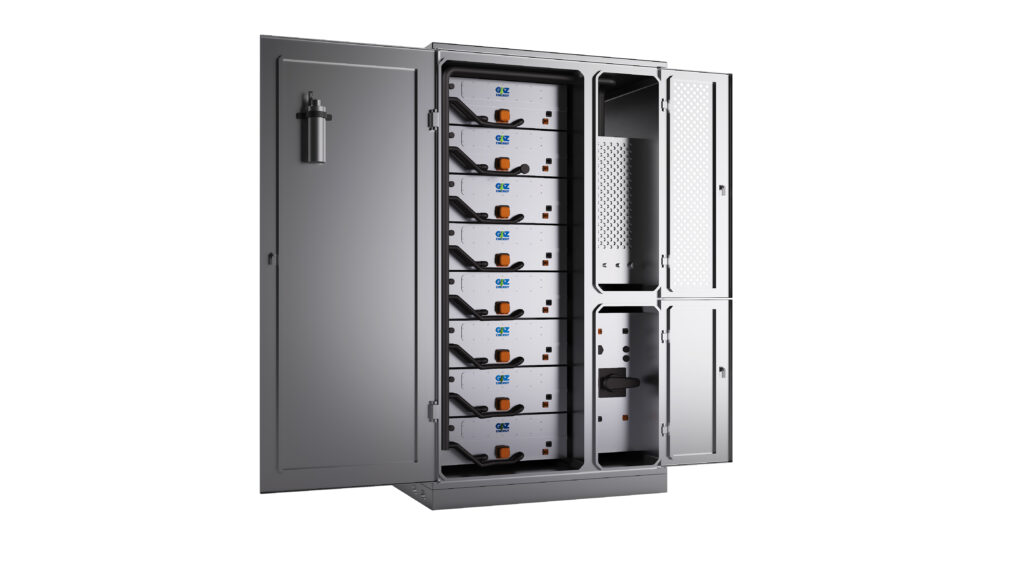
Yes, we aim to further reduce electricity and gas consumption to approximately 40 percent of the reference values. We are, therefore, installing a 750 kWp photovoltaic power plant and, above all, next year, we will launch the GAZ Energy battery storage facility, which was supplied by our subsidiary. Its total capacity will be 2.96 MWh.
You are going to store the surplus from photovoltaics in it?
Such a system is also well suited for this, but its use is much wider. One application is so-called load-shifting. The batteries are charged during the day and the stored energy is released when electricity market prices are highest. The storage will also serve to reduce power surges through peak shaving, and we will effectively lease it to the distribution network operator for performance balancing services, or PBS, to manage fluctuations caused, for instance, by renewable energy production.
The launch of PVs and the storage will thus bring us almost CZK 14 million per year and earn us more than CZK 18 million per year by providing PBS. We want to share the technology and know-how we have developed not only with other companies but also with municipalities and public administrations. We would be delighted if our modernisation efforts in Bohumín could inspire or even serve as an example for others aiming to achieve similar significant savings and energy market independence.
Thank you for the interview


