

In recent years, there has been a growing number of people who are overweight or obese. This trend is connected to an increase in lifestyle-related diseases, including heart and vascular conditions. However, this trend can be countered with proper treatment, education, and attentive patient care. We spoke with Oliver Rozboril, Managing Director of Boehringer Ingelheim’s Czech branch, to learn about additional strategies the innovative pharmaceutical company employs to combat lifestyle diseases, the focus of their research efforts, and potential areas for improvement.
You are a company with a rich history, operating not only in Europe. Do you place emphasis on maintaining research, development, and production within the European Union?
As a prominent biopharmaceutical company, Boehringer Ingelheim is dedicated to human and animal health. With over 53,000 employees, we are active in 130 markets globally and have maintained our status as a family-owned and fully independent business since our establishment in 1885. This independence is a significant strength and benefit, enabling us to consistently invest in research and development for the long term.
Our focus has remained steady over time, primarily targeting cardiovascular, metabolic, and respiratory diseases, while maintaining a global reach. Our production facilities are primarily located in Europe , including countries like Germany, Austria, France, and Greece, as well as in the USA and Asia. The same global approach applies to our research and development, where we have made significant longterm investments. For instance, in 2023, we invested EUR 5.8 billion to R&D, corresponding to 22.5% of consolidated sales. Our research teams are mostly international, making them both competitive and
efficient. Our central R&D facilities are predominantly in Germany, Austria, and France, along with locations in Switzerland, the USA, and Japan. Thus, our focus remains largely European, making us highly attuned to changes in European regulations.
We will definitely discuss the recent developments at an EU level soon. However, let us focus for a moment on your production capacity in Europe. You have recently launched a new research centre in Vienna, along with a substantial production facility. Could you provide some insight into what these entail?
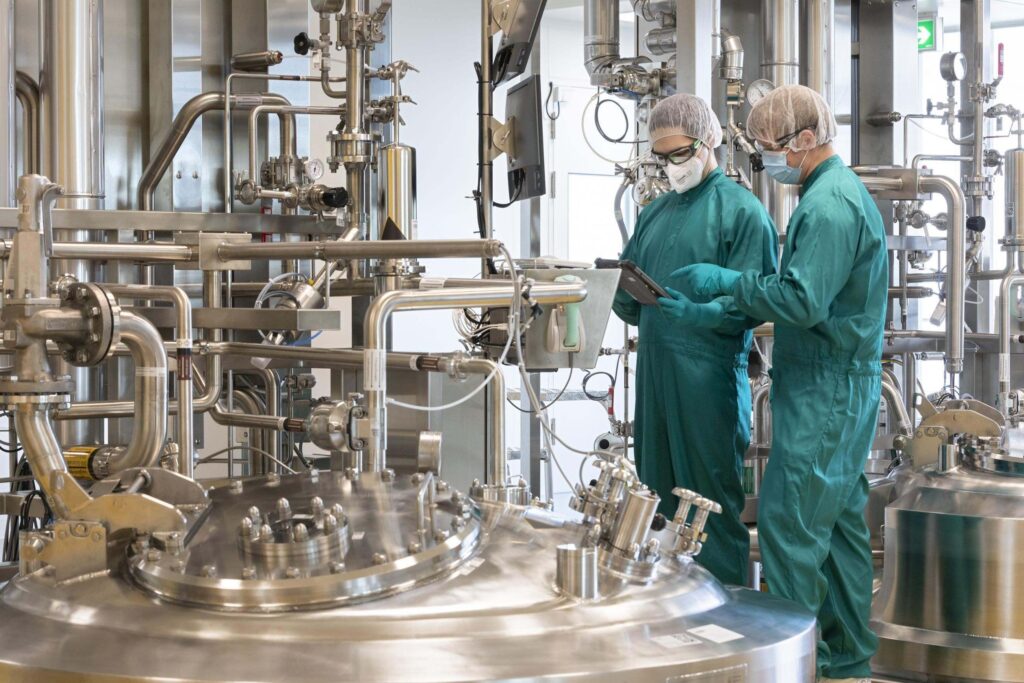
This is the new Angelika Amon Research Centre, which opened in September 2024. The centre is a fully sustainable building designed to provide optimal conditions for about 150 highly qualified staff members to research promising molecules and therapeutic approaches for cancer treatment. Additionally, in 2021, we launched a state-of-theart biopharmaceutical production facility in Vienna. We invested over €700 million in this project, marking it as one of the largest single investments in our company’s history. This facility has significantly increased the availability of biopharmaceutical medicines for patients with unmet medical needs and is among the most technologically advanced of its kind. The production lines are fully automated and highly digitalised, ensuring consistent manufacturing, and the data collected is analysed using AI to simulate and optimise the production process. These initiatives highlight Boehringer Ingelheim’s strong dedication to advancing manufacturing and research within the EU.
You invest considerable human and financial resources in the development of new medicines. How important is patent protection for your medicines to you?
Patent protection is a critical issue not only for our company but also for maintaining Europe’s competitive edge. The ongoing discussions around the “EU pharmaceutical package” could either boost European investment or risk us falling behind the USA and China permanently. This elevates the issue of patent protection from just a healthcare concern to one that impacts industry and the economy as a whole. To ensure the long-term competitiveness of Europe, the pharmaceutical industry needs to become one of the EU’s strategic priorities.
From the perspective of a pharmaceutical company, the basic period of patent protection is crucial, as it brings certainty of return on investment. If this period is shortened, the European area will fatally
lose its attractiveness to the aforementioned USA or China. This is, unfortunately, a harsh economic and industrial reality.
I am optimistic that the final version of the new European legislation will benefit the future of the pharmaceutical industry in Europe. I trust that the European Commission and Members of the European Parliament will take lessons from past mistakes in other sectors. A current challenge is the stance of Central European governments, including the Czech Republic. The proposed limitations and reduction in patent protection do not align with the long-term interests of the EU, the economies of the individual Member States, or patients. I hope that 2025 will usher in a more rational discussion and lead to a favourable compromise in this regard.
The current lifestyle brings with it demands for new therapeutic approaches. Is your company responding to this? What do you offer to your patients?
Modern lifestyles introduce numerous risks, including the increasing prevalence of being overweight and obese, even among children. This trend is linked to a rise in noncommunicable diseases such as cardiovascular conditions (like heart failure), metabolic disorders (particularly type 2 diabetes), and chronic kidney disease. These issues lead to significant indirect costs due to reduced work productivity from illness and, unfortunately, are also associated with higher mortality rates.
Even three decades after the fall of the Iron Curtain, mortality rates from the aforementioned diseases, life expectancy, and particularly healthy life expectancy in the Czech Republic still align with the historical boundary that once divided the West and the East politically. We continue to lag behind Western Europe in all these aspects. Therefore, in addition to pursuing innovative treatment solutions, we aim to collaborate with health insurance companies, professional societies, and patient organisations to enhance the organisation of patient care. This partnership is intended to facilitate early disease detection and streamline a patient´s journey through the healthcare system. We are also optimistic about the new initiatives outlined in the National Cardiovascular Plan of the Czech Republic, which was approved by the government late last year.
Our efforts extend beyond cardio-renalmetabolic health, as we aim to be a longterm partner for the Czech healthcare system. I would like to briefly highlight our focus on mental health, which has come into focus mainly due to the impact of the COVID-19 pandemic. In the future, we intend to contribute added value to this field, alongside innovative therapies, by engaging in projects that enhance the detection, diagnosis, and treatment of patients with mental illnesses. Additionally, in collaboration with patient organisations, we seek to address sensitive and often overlooked issues, such as the stigma surrounding mental health conditions like schizophrenia.
You say you are optimistic about the future. So what are your visions and values for the next few years?
Our primary goal is logically to enhance the health and lives of both people and animals. We concentrate on diseases and conditions in areas where there is a significant unmet medical need, meaning that there currently are not sufficiently effective treatments or therapies available for patients. Presently, we are developing new therapies for chronic cardiovascular and metabolic diseases, oncology, pulmonary fibrosis, and mental health. In the field of animal health, we strive to be a leading global provider of vaccines, therapeutics, and preventive care, aiming to protect animals from disease and pain.
We place significant internal and value emphasis on our Sustainable Development for Generations project. For instance, we have pledged to achieve carbon neutrality in all our EU production by 2030. We invest in the growth and training of our employees, particularly in areas like technology and artificial intelligence. Additionally, we are committed to addressing disparities in access to health and care services wherever we operate. In the Czech Republic, for the second consecutive year, we are the main partner supporting STOB (Stop Obesity) family healthy lifestyle courses, which aim to change family habits and prevent childhood obesity. These specific initiatives yield tangible, concrete results, which is very gratifying to me.
As I look towards the next decade, I believe Boehringer Ingelheim holds immense potential and opportunities, making it an excellent place for researchers and those passionate about innovation. After 20 years with the company, what I value most is the internal culture and the chance to be consistently involved in regional or global teams. Importantly, our achievements are never the result of individual efforts but are always the product of teamwork.
Thank you for the interview.


