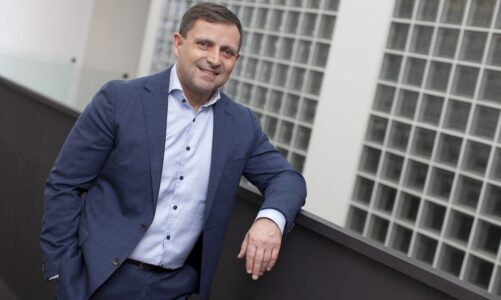

We discussed the future direction of Czech healthcare and the significance of prevention with Associate Professor Michal Pohanka, M.D., Ph.D., who is the head of the Department of Sports Medicine and Rehabilitation at St. Anne’s University Hospital in Brno.
Having spent your entire career in public healthcare, what is your perspective on the role of private healthcare in the context of healthcare financing within this system?
That is a thought-provoking question. With over 30 years of experience in healthcare, I have noticed recent advancements in the field. I think the private healthcare system holds significant importance. It is crucial to maintain a balance between private and public healthcare systems, as private care can drive progress in various areas and provide superior services.
Those who keep up with medical advancements are aware that some parts of healthcare are profitable, while many others are not, and may even operate at a loss. Patients benefit from a broadly accessible range of health services, and it would be a major error for any type of care to be excluded from coverage by health insurance companies or the system simply because it is not currently profitable or incentivized.
You have a professional career in Brno and teach at Masaryk University. What are the challenges confronting the healthcare system in Brno?
The healthcare system in Brno presents an intriguing subject. As part of the South Moravian Region, Brno serves as a hub for much of the specialised medical care. It is crucial to ensure that healthcare services remain accessible not only to Brno residents but also to those from surrounding areas, which involves maintaining a balance among healthcare providers. A significant challenge facing Brno’s healthcare, similar to the situation across the country, is the shortage of healthcare workers, especially nurses and doctors in certain specialties. I think this trend will continue, and it will be necessary to prepare for it and seek solutions to reverse it.
You specialise in sports medicine and rehabilitation. How would you describe the health status of the current population, and what steps can businesses take to encourage preventive healthcare for their employees?
Regrettably, I must point out that the overall health status of the population is on a downward trend, and it is particularly concerning that this decline is most evident among teenagers and children.
At this point, it is important to mention the epidemic of obesity, diabetes, and other cardiovascular diseases, all of which have one common denominator: inactivity. As we enjoy better living standards, we tend to prioritise convenience, which diminishes our fitness levels and paves the way for various lifestyle-related illnesses. In this context, health insurance companies and other payers play a vital role in encouraging, or even requiring, their clients to participate in physical activities. It is important to consistently educate people about how exercise can alleviate many health issues and prevent others altogether.
Employers also have a role to play in promoting health by offering partially funded physical or rehabilitation programmes to reduce employee sick leave. This approach is advantageous for both sides,
as it results in a workforce that is healthier, less prone to illness, and more positive. By ensuring sufficient physical activity, we can prevent many lifestyle diseases. Furthermore, there is a notable gap in the medical field, as numerous patients are not adequately educated about these benefits.
Thank you for he interview.