

Petr Kapoun serves as the CEO of TRL Space, a Czech private company recognised globally. The company was established with the primary aim of uniting top experts, engineers, and scientists from around the world.
What do you envision for the future?
Our Objective Is To Place the Czech Flag on the Moon and Distribute Space Technology Globally. We intend to demonstrate that the Czech Republic can execute complete space missions, not merely acting as a subcontractor.
We concentrate on creating products suitable for space agencies and private customers across sectors like security, ecology, agriculture, and industry. Our strategy also involves engaging in technologically complex lunar missions, positioning us among the key players capable of contributing to the most advanced international projects.
What types of missions do you focus on?
We operate in two primary areas. The first area concerns satellites equipped with hyperspectral cameras. This year, we launched TROLL, the largest Czech commercial satellite featuring this technology, allowing for detailed analysis of Earth – from spotting illegal landfills to observing vegetation. For instance, the ata will be utilised by the Czech Environmental Inspectorate.
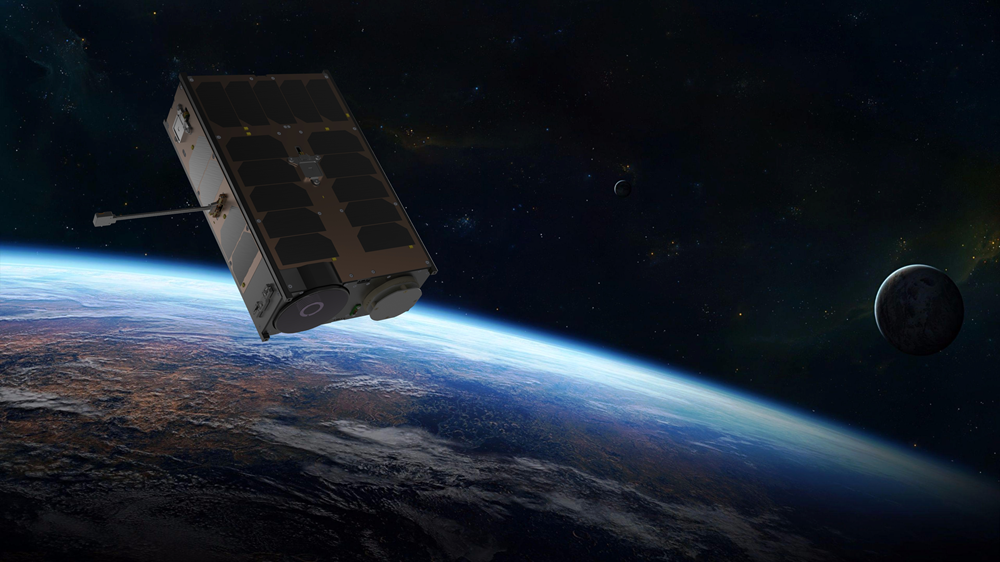
The second area focuses on satellites with high-resolution cameras, like the TRAP satellite. We are developing the Drak mission, which will support Ukraine during the conflict and in the long-term safeguarding of its territory. Unlike TROLL, it employs an optical sensor with extremely high resolution instead of hyperspectral technology.
Do you also develop your own products?
Besides satellites, we concentrate on creating technologies that have broader commercial applications. We are developing the deployer, a small satellite launcher designed to provide a more cost-effective and quicker alternative compared to other options on the market. Another important product is the On-board Data Processing unit from our sister company Zaitra. This unit allows data processing directly on satellites using artificial intelligence, which is crucial for autonomous satellites and lunar missions.
Are you involved in lunar missions?
We are currently working on several projects. One of the key initiatives is LUMI (Lunar Mapper and Inspector), a microsatellite designed to map the Moon’s south pole with a precision of 50 cm, which is significantly more accurate – ten times better – than current models. LUMI has been chosen as part of ESA’s Small Exploration Missions programme.
Additionally, we are developing the Lunar Geology Orbiter for analysing lunar geology, as well as LUREPOS, a system for navigation and positioning on the Moon that does not rely on GPS.
Thank you for the interview.