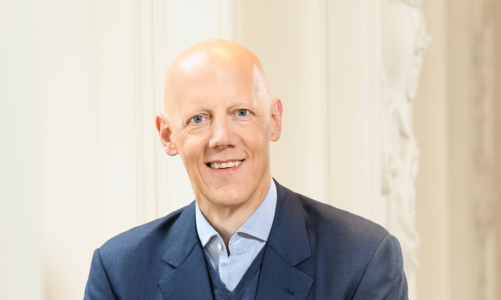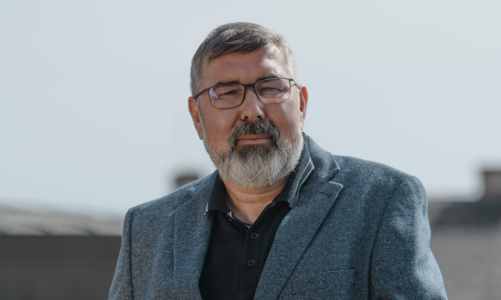
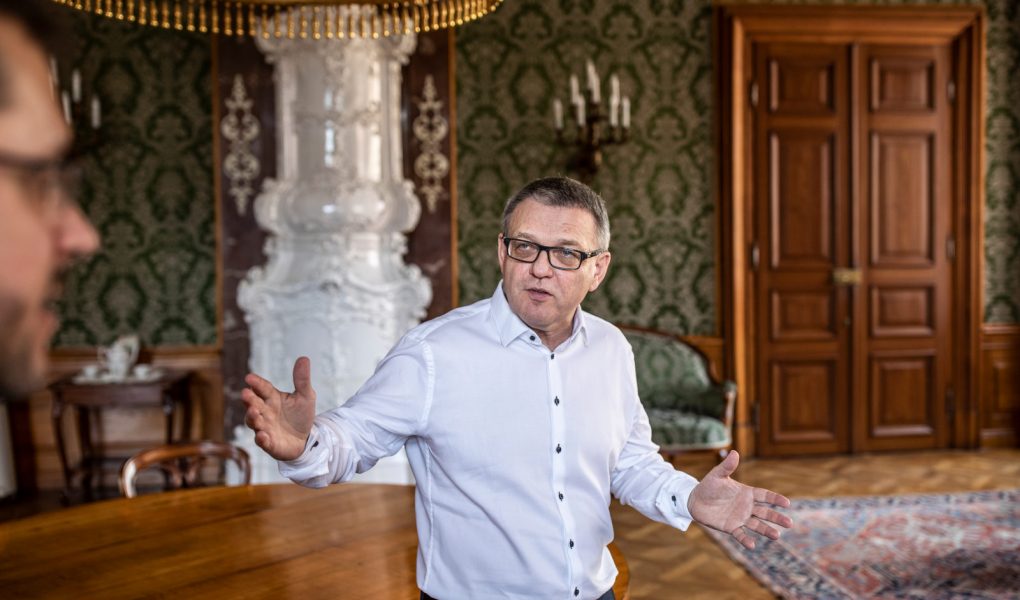
Lubomír Zaorálek, a graduated philosopher, worked as a TV dramaturge and university teacher. In politics he has held the position of the President of the Chamber of Deputies, the Minister of Foreign Affairs and currently he invests his efforts in the field of culture as the Minister of Culture. His hobbies include literature and languages.
Culture is now going through a difficult period, like society, and what is required is crisis management and setting priorities. What are your priorities and how would you like to achieve them?
The priority is, of course, the survival of artists themselves, of those who create what we call live art. We will never lose Shakespeare and his Hamlet will stay with us in libraries and theatres forever. But if we do not support live art in these hard times, we may lose someone who might become Shakespeare one day. Similarly, I want to advocate increasing funding under the Covid -Culture subsidy programme, through which we allocate money not only to entities active in the culture business but also to individuals, i.e. the self-employed. Therefore, the second incentive of the programme will be launched in October. We will distribute approximately 750 million crowns and the Prime Minister has promised that when we run out of money, the programme will be provided further finance. In addition, there are standard subsidies in progress, mainly to non-profit culture organisations and we would like to fund as many projects as possible from this resource.
Culture is not only a national issue, but it also has regional aspects. What, in your view, is the role of the Ministry of Culture in this dimension and how successful are you in supporting regional culture?
This is related to the first question. Naturally, even in this case, the most important thing is the survival of regional culture. The path towards its survival is not different from what I have already outlined. At the same time, I would like to push an increase in the subsidies for regional theatres and orchestras. I note that we helped them in spring during the first epidemic phase. We will send money to individual regions next year as well, so that they will not lose their local theatre ensembles or local orchestras in the further pandemic phases, which we are facing now. However, regional authorities and municipalities must contribute as well, and they must not approach their cultural institutions as something which might be sacrificed. That would be a disaster. In addition, I am convinced that, even in a purely economic sense, supporting culture pays off in the long.run. Our castles and chateaux are, for example, big attractions for domestic and foreign tourists. Increased funding of construction and repair work in local cultural centres, libraries and museums has also positive effects on the local economy, which must currently also be taken into consideration.

Business and culture interact. Culture needs to be part of corporate social responsibility and on the other hand, company management requires culturally literate managers. Do you see it in a similar way?
Primarily, I would like to emphasize that it is not possible to take culture only as a leisure activity, as the Minister of Health described it recently.Culture employs hundreds of thousands of people, it is an important power in the Czech economy and, of course, people employed in this field depend on it.
Besides what I mentioned when I was talking about construction work and repairs and their positive effects on businesses, my aim is to ensure that budgets for new public buildings will set aside money for works of art in the public space. This would support regional projects and local firms. I speak of it as “one percent for art. “Public space should not only be a purpose-built space. It should serve as a space to meet and to spend free time. That is why it is necessary to take care of it and to invest in it. People have different needs and the need to live in a cultural public space is one of them. If you look abroad, many states and cities could be a model for us in this sense.
Thank you for the interview.