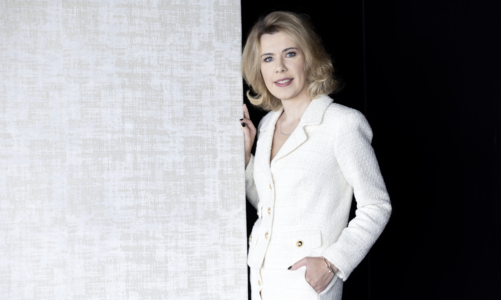
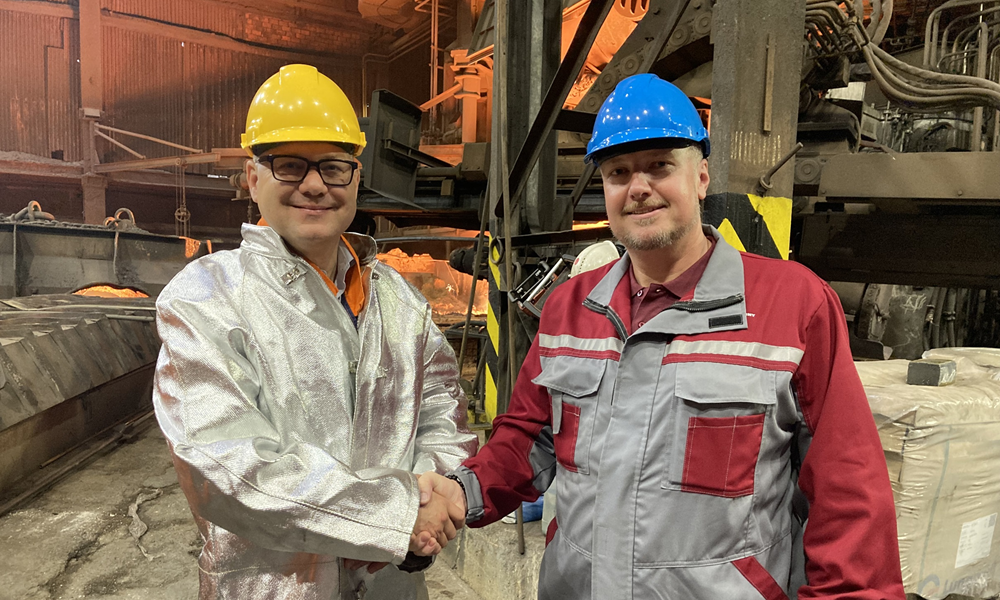
Decarbonisation poses major challenges for the Czech industry, including the substantial costs associated with shifting to greener technologies, changes in regulations and taxation, and maintaining global competitiveness. Roman Heide, Chairman and CEO of the Třinecké železárny (Třinec Iron and Steel Works), and Kamil Čermák, Chairman and CEO of CEZ ESCO, have shared their insightful perspectives on this matter with us.
Kamil Čermák has previously worked as a spokesperson and advisor to the Minister of Industry and Trade and subsequently took on managerial positions in several companies. Since 2016, he has been the Chairman and CEO of CEZ ESCO. He also serves as the Chairman of the Administrative Board for the Alliance for an Emission-Free Future and the Chairman of the Board for the Union of Modern Energy.
Roman Heide has occupied senior management roles in the steel sector and is currently serving as the Chairman and CEO of the Třinecké železárny (Třinec Iron and Steel Works) Additionally, he holds the position of Chairman of the Steel Union and Vice President of the Confederation of Industry of the Czech Republic.
Mr. Čermák, CEZ ESCO recently celebrated 10 years on the market. How do you evaluate this decade?
We have expanded from a smaller cogeneration supplier with just two subsidiaries and a few hundred employees into a holding company consisting of more than 20 companies, employing 2,200 people, and achieving an EBIDTA (operating profit before depreciation and amortisation) of CZK 2.6 billion in the Czech Republic. We have established ourselves as the market leader in the modern energy sector, supported by over 50,000 customers. Looking ahead, we have ambitious plans. The modernisation of the Czech heating sector, enhancing energy efficiency, and decarbonising industry are set to be key strategic priorities for us. Additionally, we are committed to developing new technologies in areas such as power balancing services, flexibility, and storage – topics that will be increasingly significant as electricity generation from renewable sources continues to rise.
Mr. Heide, CEZ ESCO is a long-term partner of the Třinec Iron and Steel Works. How do you assess its performance on the market?
Due to work commitments, I was unable to attend the celebration of CEZ ESCO’s 10th anniversary in person. However, I extended my best wishes to the company for the coming years and expressed my gratitude for its contributions over the past decade. Our teams have been engaged in discussions about decarbonisation strategies for the Třinec Iron and Steel Works for a significant period, and from my own experience, I can attest that CEZ ESCO always maintains a very professional and yet as open as possible approach. Since our decarbonisation strategy is of utmost importance to us, we are keen to collaborate with the best in the field. The achievements of CEZ ESCO, as highlighted by Kamil, truly speak for themselves.
How significant is the business potential of decarbonising the industry?
Kamil Čermák
We view this topic as a key factor in driving the ESCO business forward in the years ahead. Manufacturing, especially in heavy industry, is focusing on modernisation and enhancing competitiveness. Despite the general reluctance of industrialists towards the Green Deal, they recognise the necessity of these investments to remain competitive and up-to-date. Decarbonisation is a global phenomenon, and we are committed to efficiently assisting Czech and European companies in this process.
Roman Heide
The steel industry faces intense competition in Europe and worldwide, requiring us to keep up with the times. We aim to gradually and realistically achieve our corporate vision of cutting CO2 emissions from production by 55 % by 2030 compared to 1990. We plan to invest in renewable energy, a new iron ore briquetting line, a combined cycle gas turbine, electric mobility, and a modern electric arc furnace. Additionally, since this year, we have been sourcing some of our electricity from renewable sources hrough a PPA contract with CEZ ESCO.
This is linked to the phasing out of coal, not just in the energy sector. What are your thoughts on the industry’s “coal-free future”?
Kamil Čermák
In terms of the energy sector, coal is essentially a non-issue in the European Union, except for countries like Germany, Poland, and the Czech Republic. While coal still holds a significant role in the industry, this is expected to change rapidly. An example of this transition is the 170 gas-fired cogeneration units operating in the Czech Republic under CEZ ESCO. Additionally, we are observing increasing interest in our other modern energy solutions, such as photovoltaics, EPC projects, and upgrades to lighting and HVAC systems, among other things.
Roman Heide
We recognise the phasing out of coal as an inevitable trend. This is demonstrated by our large-scale electric arc furnace project and the conversion of one of the boilers at our Třinec Energy facility to a combined cycle gas turbine system. On the other hand, however, we will need a stable supply of electricity, which is why, in my view, we need to build new sources of electricity in the Czech Republic, whether nuclear or renewable sources, so that there is enough energy for both households and industry. It is also essential to have acceptable electricity prices, which will significantly impact our economy in the coming decades. Indeed, we will be able to rely on our own renewable sources, but the steelworks will still require a consistent and affordable supply of electricity from the grid at all times.
The issue of energy security has been widely discussed in recent years due to the war in Ukraine. How has this influenced the companys’ view of energy?
Kamil Čermák
This issue is closely tied to energy prices, which surged to record highs shortly after the war began, prompting households and businesses to focus more on their energy needs than before. At CEZ ESCO, we have observed this through an increased interest in photovoltaics, EPC projects, modern lighting, and solutions that save energy and offer partial independence from the grid. Customers have shifted from passive to active, viewing energy as a comprehensive set of measures rather than just a commodity supplied through the distribution network. Given the current geopolitical situation, energy and raw material independence is more crucial than ever. Both the state and companies recognise this, and CEZ ESCO is here to assist businesses in this transition.
Roman Heide
Our priorities include energy security, supply stability, commodity pricing, and the modernisation of our production, which we are planning for in the coming years. This is why we select experienced partners who can provide advice and customise decarbonisation strategies for us. We have consistently supported a pragmatic approach to environmental sustainability. Additionally, in the steel industry, decarbonisation involves significant time and financial investments. We intend to consider this as we approach future projects. Although we have recently decided on a slight postponement of one part of the decarbonisation project, our objectives remain unchanged.
How investment-intensive can decarbonisation be?
Kamil Čermák
In this context, it largely depends on the sector in which a company operates and the extent of decarbonisation being considered. We are talking about investments ranging from millions to billions of Czech crowns, with a very broad spectrum. A smaller industrial company will invest a different amount than a heavy industry company, like the Třinec Iron and Steel Works, where investment is significantly higher. Therefore, I advocate for support from the state or European funds at this stage. Companies of such size and importance cannot bear these large investments alone, especially since they are crucial for enhancing the competitiveness of the entire Czech economy.
Roman Heide
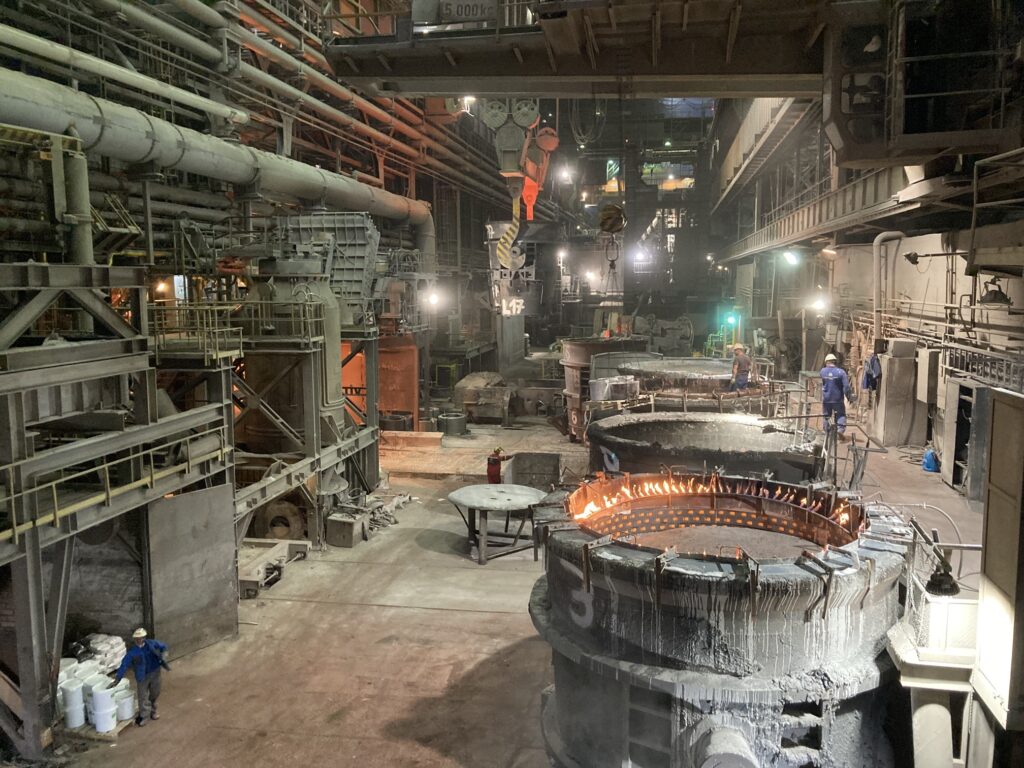
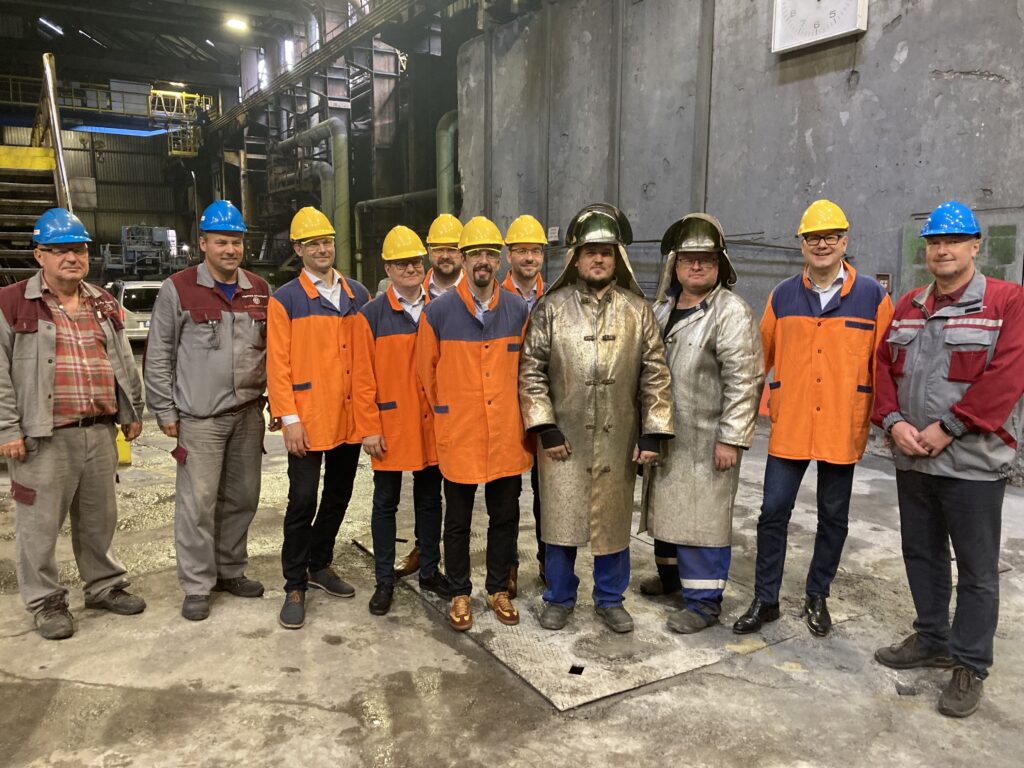
Our decarbonisation efforts are estimated to cost around EUR 1 million or approximately CZK 25 billion. The most significant expense involves the proposed electric arc furnace, which will replace production at one of the two blast furnaces we plan to shut down. Additionally, we aim to expand renewable energy use, likely through PPA projects. This will represent the largest investment in the Czech steel industry since the 1980s. All this will, of course, also require the implementation of additional related constructions and infrastructure in the metallurgical area, including the construction of new production halls.
Given the high costs of such plans, what funding options are available for these projects (such as subsidies, etc.)?
Kamil Čermák
In the realm of energy services, many of our clients depend on subsidies, whether from national or European sources. When considering a large and ambitious project like the one planned by the Třinec Iron and Steel Works, the assistance provided by subsidies is absolutely essential. This is relevant not just for the Czech Republic but for Europe as a whole, where the European Union needs to stay competitive with rapidly growing markets in Asia and America. An example of effective legislation in modern energy is the support for decarbonisation in the US through the Inflation Reduction Act, which strongly backs modern energy initiatives.
Roman Heide
We plan to cover at least 70% of the investment with subsidies; otherwise, decarbonisation is not financially viable for us. I believe subsidies for green investments are justified, partly due to the substantial amount we pay in taxes and emissions allowances. Additionally, companies in neighbouring countries receive similar support, and we need to stay competitive. It is important that everyone has an equal and fair opportunity. A major issue I see in the Czech Republic, and Europe in general, is the overwhelming bureaucracy that significantly hinders the development of industry and other sectors.
We often hear that only Europe is decarbonising. Is this a fact or a myth?
Kamil Čermák
This notion is a myth perpetuated by those who are consistently against any industry and energy-reening efforts. I believe that ideology – regardless of the side – is generally harmful. We prefer to approach decarbonisation from the perspective of the real economy, considering actual needs, financial capacities, and business plans rather than through an ideological lens. Additionally, in the energy sector, we must respect and adhere to the laws of physics. Industry demand for modern energy and decarbonisation solutions is already increasing. For CEZ ESCO, this demand will be one of the main market drivers in the coming years.
So, is pragmatic decarbonisation the way to go?
Roman Heide
Naturally, we also agree on the necessity of making production more environmentally friendly. This is why we have undertaken specific initiatives worth over CZK 11 billion in the past decade. We have significantly reduced dust emissions, and we are also reducing carbon dioxide production, for instance, through an investment in a briquetting line that will process raw materials using a cold method. Additionally, this year marks the start of constructing a new steam-gas cycle at Energetika Třinec’s power plant, which will replace a coal-fired plant. I am confident that by 2030, we will have made significant progress toward our commitment to reducing carbon dioxide emissions. However, state and European support will be crucial, along with actively safeguarding the EU market against cheap steel imports from countries that do not face stringent and expensive environmental regulations.
Do you see any regional differences in terms of decarbonisation?
Kamil Čermák
Of course, moving away from coal and pursuing decarbonisation is a more urgent matter in regions whose economies have depended on this resource for many years. This is especially true for South Bohemia and North Moravia, where CEZ ESCO is spearheading a significant transformation, particularly in the heating sector. In these areas, as in other industries, it is essential to maintain current standards and operations. In the “coal regions”, this transition is understandably more costly and challenging in terms of communication. However, I believe we have achieved success in recent months, both in the heating industry and in our interactions with major industrial players. Our partnership and collaboration with the Třinec Iron and Steel Works exemplify this success.
Roman Heide
Speaking specifically for North Moravia, I believe the shift away from coal is viewed not only as an economic matter but predominantly as a social one. In traditional industries like coal mining and metallurgy, nearly every family has at least one member employed, and for many, there is a sense of nostalgia due to these industries’ past unquestionable significance to the entire economy. In North Moravia, more than anywhere else, it is crucial to approach the transition to greener practices as pragmatically as possible and to gradually prepare the economy for an entirely different operational model. Therefore, it is essential to maintain the current industry while also attracting investments that will create new jobs and help focus the region’s economic development towards new paths.
Mr. Heide, where do you see the Třinec Iron and Steel Works in ten years?
In ten years, I hope our company will be thriving and continuing to modernise. We also anticipate that CEZ ESCO will remain a key partner in our decarbonisation efforts, such as supplying us with green energy and modern energy solutions. If I were to envision the future, I would like the Třinec Iron and Steel Works to be seen not only as a top steel supplier but also as a producer of hydrogen and other by-products. Most importantly, we aim to reduce our CO2 emissions significantly.
Mr. Čermák, what is your view of the future and the position of CEZ ESCO?
We aim to remain the leader in the modern energy industry and continue being the top choice for most government-related companies. Additionally, we want to propel CEZ ESCO towards becoming more technology-focused, aligning with new trends and modern technologies in the energy sector. This shift is increasingly important given the rising production of electricity from renewable sources. Key areas include energy storage, aggregation, grid flexibility services, PPA contracts, and integrated heating services. Therefore, I believe that celebrating our ten-year anniversary marks the beginning of another exciting phase for us.
Thank you for the interview.