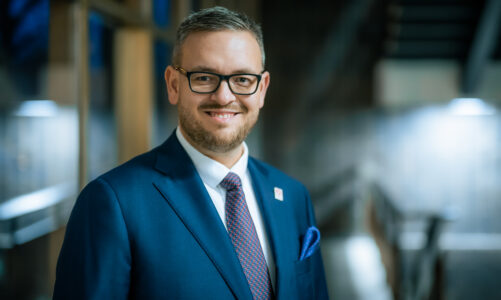
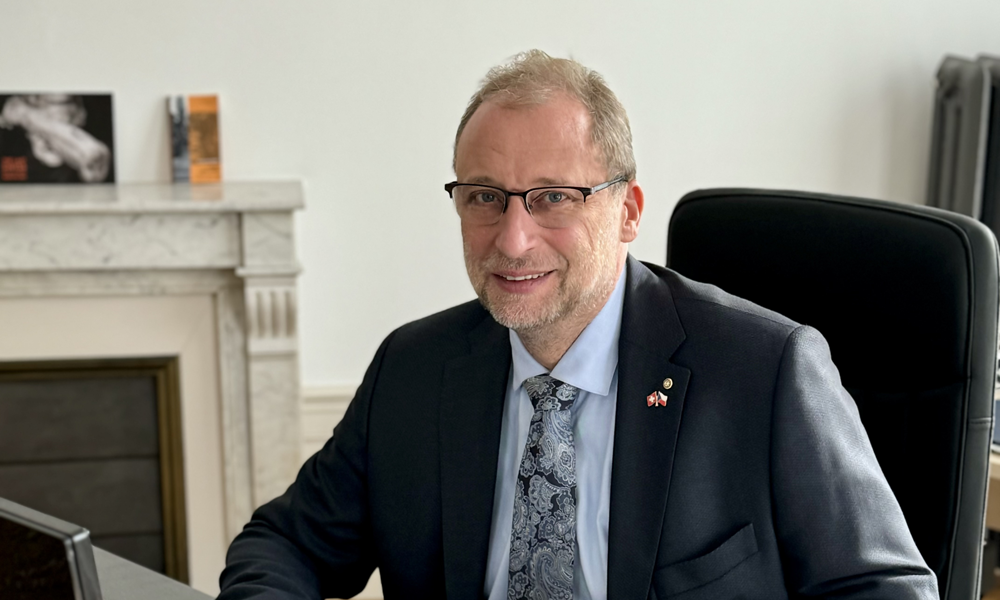
Since 2024, Tomáš Jan Podivínský has been the Ambassador to both the Swiss Confederation and the Principality of Liechtenstein. With a background in journalism, he has also ventured into business and politics and has held the position of a minister.
Ambassador, you have a background in the Czech civil service and have served as a government minister. How does being an ambassador differ from these roles?
Both a minister and an ambassador are civil servants, but their roles differ. A minister oversees a large department, while an ambassador handles a broad range of mostly bilateral relations, including politics, trade, culture, support for compatriots, and consular issues like lost passports, births, deaths during holidays or car accidents. Additionally, an ambassador can perform tasks such as marrying couples, which a minister cannot. Both positions serve their country, but an ambassador could be considered a “smaller-scale minister” with a more diverse set of responsibilities. It is crucial to enjoy the work, as it requires more than a typical eight-hour workday and often involves duties in the evenings, on weekends, and during holidays. Family support, or at least tolerance, is essential for both roles due to the high demands placed on them.
Moreover, throughout my life, I have been bridging the gap between diplomacy and business, which, as the title of your magazine suggests, are two complementary realms. Experience in one field enhances proficiency in the other. When you have extensive, long-term diplomatic experience and well-established relationships with a country’s representatives rooted in mutual trust, coupled with practical experience in international trade and managing large commercial projects, you can negotiate, for example, a major international economic agreement, which is then signed by the highest representatives of both countries. It is beneficial, perhaps even essential, to start from the ground up, as I did, beginning in an export department without access to international calls and in diplomacy as a third secretary in the commercial department. Even the most educated person gains true insight through hands-on experience, which is crucial for performing significant tasks proficiently and ethically. Additionally, it is important to possess empathy, the ability to listen to more experienced people, continuously learn from mistakes, and maintain humility regarding the mission you have been entrusted with, whether in Prague or abroad.
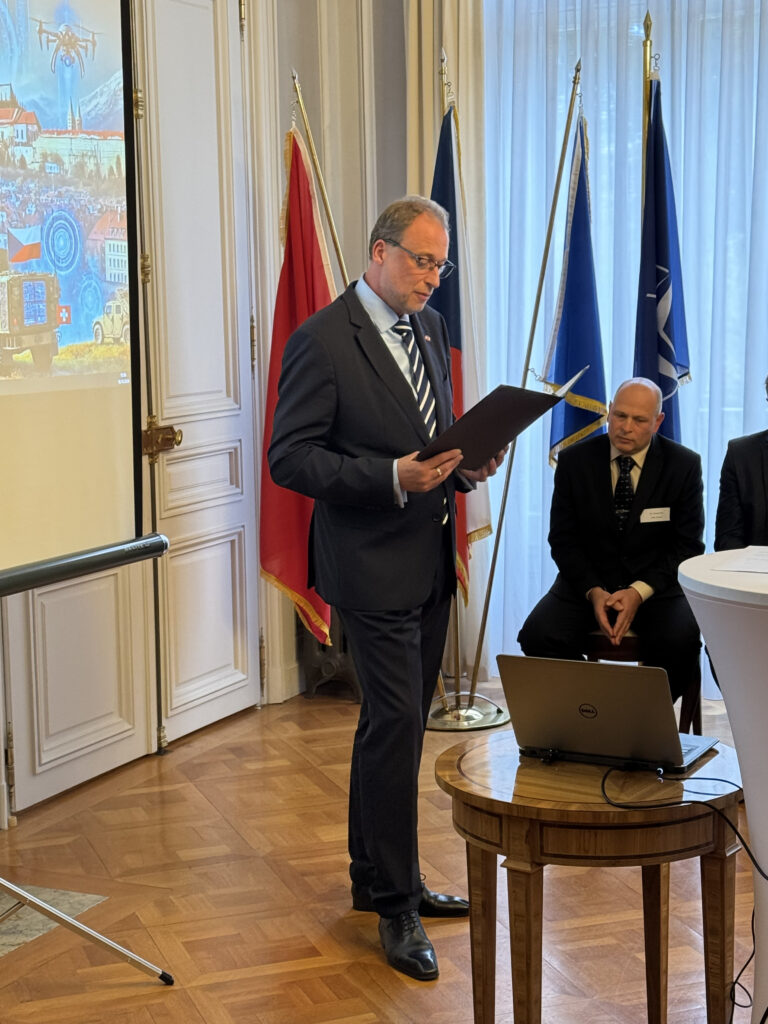
An event aimed at presenting Czech technology companies to Swiss partners. Three Czech companies, URC Systems, ERA, and JISR Institute, showcased their products and services in security technologies and the military industry at the Czech Embassy in Bern on 18 October 2024.
You represent the interests of the Czech Republic in the Swiss Confederation. How are the current economic and cultural relations between the two countries?
Economic relations have been evolving rapidly, especially in sectors with high added value, such as biotechnology, artificial intelligence, pharmaceuticals, finance, energy, the defence industry, and areas connected to top university research. There has also been a significant increase in mutual investment, particularly with more substantial investments from the Czech Republic to Switzerland. Notably, it is not just the large Czech companies and investors leading this trend but also small and medium-sized enterprises finding opportunities in niche areas and leveraging mutual synergies, including start-ups. We have plenty of activity to manage, and we are pleased that larger companies generally require little assistance from us, allowing us to concentrate more on supporting small and medium-sized enterprises in strengthening their connections in Switzerland. However, the focus remains on high-end products, technologies or services, as basic commodities like concrete or iron are not in demand.
Regarding culture, we strive to foster mutual exchange as much as possible through cultural events at the embassies or by showcasing our regions. Despite the lack of a shared border, the cultural interchange between the two countries is so extensive at all levels that it is virtually impossible to keep up with everything physically. The presence of around fifty thousand Czech expatriates in Switzerland plays a significant role in this, contributing through cultural, sports, and educational associations as well as a strong sense of tradition. For example, this year, we celebrated the 110th anniversary of the Union of Czech and Slovak Associations in Switzerland.
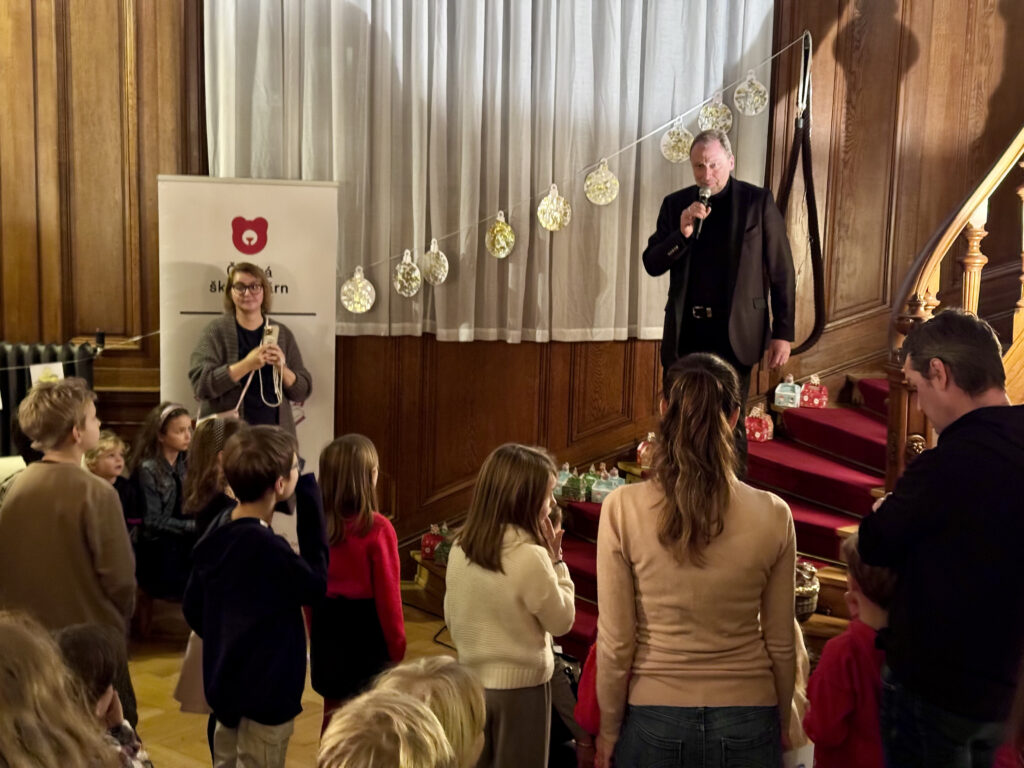
A St. Nicholas Day celebration organised at the Czech Embassy in Bern in collaboration with the Czech School in Bärn on 4 December 2024.
There is a Swiss-Czech Cooperation Programme. Can you define the areas of support?
For instance, we actively support PROPEDs, economic diplomacy projects that include thematic conferences, scientific and professional symposia, expert missions, and presentations of leading companies and technologies. We receive significant assistance from top state officials in these endeavours. Last autumn, the Czech-Swiss Biotechnology Conference at the Technical University in Zurich was inaugurated by President Petr Pavel. Ministers, parliament members, university representatives, and industry experts also participated. We promote technological exchange and business cooperation by organising missions to the Czech Republic for visits to scientific institutions and companies. We connect Czech scientists in Switzerland with our companies and institutes, organise missions to trade fairs and support defence industry collaboration, such as delegations attending NATO Days in Ostrava, which holds particular sensitivity in neutral Switzerland. We aim to support high-tech and applied science and research, which are in high demand in Switzerland and have excellent potential for development and application locally and internationally. This is our primary focus, but we also support cooperation and partnerships among towns and cities, municipalities, schools, universities, regions, and specific sectors based on the priorities of the Chamber of Commerce, with which we have excellent collaboration, among other initiatives.
You are also accredited for the Principality of Liechtenstein. What is the level of mutual economic and cultural relations?
Since Liechtenstein has a population of just over 40,000, our trade levels naturally cannot compare to Switzerland, which has nine million residents. However, the positive aspect is the mutual trade trend, which has steadily increased over the past five years in exports and imports. Promising areas for our companies include digitalisation, artificial intelligence, financial software, and antivirus solutions. The involvement of Czech firms in blockchain and cryptocurrencies is both welcome and robust, and there is a continued demand for high-precision Czech machine tools.
Some of the major companies operating in Liechtenstein in the IT or lottery sectors include the KKCG group owned by Mr. Karel Komárek, the energy conglomerate Sev.en Energy from Mr. Pavel Tykač’s group, and the Czech software giant Unicorn. Additionally, almost a hundred Czech university students are studying in Liechtenstein.
Conversely, when a Czech craftsman or home handyman uses a Hilti drill or other tools, they are likely aware that these are Liechtenstein-made products. The same goes for Hoval boilers and heating systems. Moreover, the machines from the Liechtenstein company Kaiser are often used to clean clogged sewers, and they also supply various equipment for maintaining Czech pipe networks and municipal technology. Despite differing perspectives on certain historical events, it is encouraging that our relations are progressing well. A few days ago, we sent a congratulatory note from Foreign Minister Jan Lipavský to Sabine Monauni, the new Liechtenstein Minister of Foreign Affairs, Environment and Culture. Towards the end of May, Minister Marian Jurečka undertook an official visit to Vaduz, and in early June, Jakub Karfík, the head of our ministry’s section, participated in consultations at the Ministry of Foreign Affairs. We have maintained diplomatic relations at the embassy level since 2009, and a Czech Honorary Consulate General has been in Vaduz since either 2018 or 2021, alongside a Liechtenstein Honorary Consulate in Brno. Both are wellstaffed and actively support trade, cultural exchanges, and collaborations in ecology, applied research, financial services, and education.
In both larger Switzerland and smaller Liechtenstein, Czech involvement is appreciated, particularly in areas that are innovative, offer high added value, and have potential for further development. Given the highly innovative environment in these regions, there is an excellent opportunity for market application, exports, and ongoing professional growth and business success.
Thank you for the interview.